
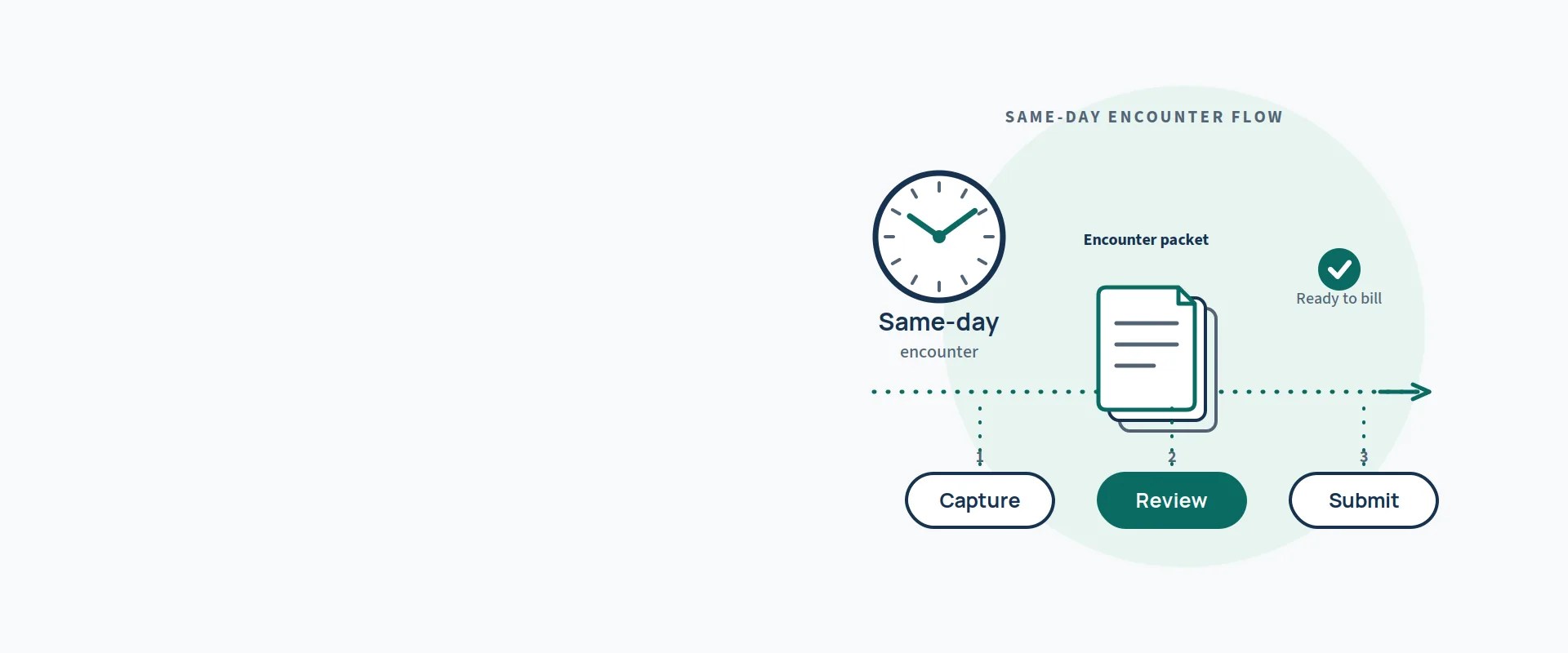
Urgent care billing services from Medical Billing Services Group (MBSG) are built for speed and volume — walk-in E/M visits, in-house X-ray and labs, procedures, and occupational medicine, all coded and submitted daily. We handle place-of-service accuracy, E/M leveling, payer-specific urgent care rules, and denials, so your front desk stays focused on throughput, not paperwork.
High volume, thin margins, denials you can’t afford? Get a Free Billing Audit — we will review your urgent care claims and pinpoint exactly where revenue is leaking.
Practice/setting fit
Our urgent care billing services fit standalone urgent care centers, multi-site urgent care groups, hybrid urgent care and primary care practices, and occupational medicine clinics. Urgent care is a volume business with retail-like pace: dozens of encounters a day, most of them unscheduled, many of them after hours or on weekends, and every one of them needs a clean claim within days — not weeks — because cash flow is the entire model.
What makes urgent care billing hard is the combination of pace and payer fragmentation. The same sore throat visit is coded, priced, and edited differently by each payer on your panel. Place-of-service coding has to be right on every claim — urgent care centers report place of service 20, and getting it wrong shifts the claim into the wrong benefit or the wrong edit set. In-house X-ray and lab services add radiology and pathology lines that each carry their own bundling rules. And self-pay patients need clean, prompt statements with collection workflows that stay firmly on the lawful side.
We manage the full revenue cycle for urgent care: eligibility checks at registration, coding from the visit note, daily claim submission, payment posting with contractual adjustments, and denial follow-up that moves fast enough to matter. Our coding team codes urgent care encounters against published edit rules before claims go out, and our broader specialty billing programs cover your other service lines.
Documentation and coding risks
Urgent care documentation fails in predictable places, and each one maps to a denial category:
Wrong place of service. CMS’s Place of Service Code Set assigns code 20 to urgent care facilities. Claims reported with the office place of service (11) for a freestanding urgent care center — or vice versa — can be denied or paid at the wrong rate. We verify POS 20 on every facility claim.
E/M leveling without support. Urgent care lives on office/outpatient E/M codes, and level selection must be supported by the documented medical decision making or total time. Downcoding by payers is common when the note doesn’t support the level billed; upcoding without support invites audits. We level from the note as written and flag encounters where documentation doesn’t support the billed level.
In-house ancillary bundling. X-ray interpretations, rapid strep and flu tests, urinalysis, and EKGs performed in-house are legitimate revenue — but NCCI procedure-to-procedure edits bundle certain same-day services, and some payers require modifiers or separate-line reporting conventions. We check edits across the full encounter. (Coding references last reviewed 2026-10-08; NCCI edit versions change quarterly — verify against the current edition.)
Facility-fee confusion. A small number of state Medicaid programs recognize urgent-care facility HCPCS codes (such as S9083) with payer-specific rules; most commercial payers do not pay a separate facility fee for urgent care. We bill the facility component only where a payer actually recognizes it — never as a matter of routine.
After-hours assumptions. Evening and weekend visits are the core of urgent care, but payers generally do not pay a premium for after-hours E/M in this setting. Level the visit on medical decision making, not on the clock.
Payer and authorization checks
Urgent care’s payer mix is its own risk: commercial plans, marketplace plans, Medicare, Medicaid, workers’ compensation, and self-pay can all walk through the same door in one afternoon. Each has its own timely-filing limits, its own edit set, and its own medical-necessity screens. We verify eligibility at registration — including whether the patient’s plan treats your center as in-network — and we track each payer’s filing deadline so a slow week at the front desk doesn’t become a write-off.
Prior authorization is less central in urgent care than in procedural specialties, but it still appears: advanced imaging ordered from the visit, DME dispensed on site, and some occupational medicine services need it. We check requirements before the service where the workflow allows, and we track referrals for patients sent on to specialists so the loop closes. Our eligibility and prior authorization process is built for this pace.
Workflow and reporting
Urgent care revenue lives in the visit note, so our workflow starts there. We reconcile the day’s encounter log against completed notes, code from the full documentation, verify place of service, scrub claims against payer-specific edit sets, submit daily, post payments, and work denials through our structured denial management process. Self-pay balances move through lawful patient-balance workflows with clear statements — never anything resembling licensed debt collection.
Reporting makes the pattern visible. Illustrative examples of what our reports show: a weekly denial snapshot grouped by root cause (POS errors, E/M downcodes, eligibility, timely filing), days in AR, and clean-claim rate by location for multi-site groups. These are illustrative examples, not guarantees — results depend on payer mix, documentation quality, and visit volume. But you will always see where revenue stands and what we are doing about it.
Onboarding and pricing factors
Onboarding starts with the free billing audit — a real review of recent claims across your locations, not a sales call. Implementation then covers payer enrollment verification, clearinghouse and EHR/PM connections, charge-capture mapping for in-house ancillaries, and a coding review of your highest-volume visit types. Factors that shape a quote: daily encounter volume, number of locations, in-house ancillary mix (X-ray, lab), payer mix including self-pay share, and whether you need full revenue cycle or billing only.
We do not publish one-size-fits-all rates because they would be meaningless at this volume. Pricing, minimum fees, and turnaround are quoted and scoped in your written proposal after we review your volume and payer mix. We work inside your existing systems, and compatibility is confirmed during onboarding. Data is handled under our HIPAA safeguards and business associate agreement. We serve practices in all 50 states — call +1 (307) 396-4107 or email contact@medicalbillingservicesgroup.com, or review transparent pricing details.
FAQs and dated sources
What place of service do urgent care claims use?
Place of service 20 (urgent care facility) under CMS’s Place of Service Code Set. Using the office code (11) for a freestanding urgent care center — or the reverse — causes denials or wrong-rate payment.
Do payers cover after-hours urgent care visits differently?
Generally no. Evening and weekend visits are routine in urgent care, and payers do not typically pay an after-hours premium for E/M in this setting. We level visits on documented medical decision making.
How do you handle our in-house X-ray and lab billing?
We code interpretations and tests from the documentation, check NCCI bundling edits across the encounter, and bill the facility component only where the payer recognizes it. Payer-specific rules govern here — there is no one-size-fits-all answer.
What about self-pay patients?
Self-pay encounters get clean, prompt statements and lawful patient-balance follow-up workflows. We never imply licensed debt collection — patient balances are handled as billing operations, not collections agency work.
How do we start working with MBSG?
Start with a free billing audit — we review recent claims across your locations and visit types. Or contact our team directly to talk through your volume and payer mix.
Medical Billing Services Group — Medical Billing & Revenue Cycle Management. If urgent care billing complexity is costing you visits’ worth of revenue, start with a Free Billing Audit and see exactly where your claims stand.
General educational information, not legal advice or a guarantee of reimbursement. Requirements vary by payer, plan, setting and date of service.
CPT is a registered trademark of the American Medical Association.