
Medical Billing Services Group (MBSG) provides urology billing services for practices where endoscopy bundling, biopsy unit rules, and catheterization edits quietly cut into revenue. We code to NCCI urinary and male genital policy, document anatomic site and neoplasm status, and manage the authorizations and medical-necessity reviews urologic procedures attract.
Losing revenue on cystoscopy claims you expected to be paid? Get a Free Billing Audit to see where your endoscopy and biopsy billing fell short.
Practice and setting fit
Urology is a procedure-heavy specialty where much of the revenue comes from short endoscopic and office procedures: cystoscopies, biopsies, catheterizations, bladder studies, and prostate treatments. These are exactly where bundling edits hit hardest, because the procedures combine access, visualization, and intervention that edit sets treat as single units.
We support independent urology groups, single-specialty ASCs, hospital-based departments, and practices with in-office imaging or urodynamics. Office claims face procedure-to-procedure edits and supply bundling; facility claims face separate hospital coding rules that must reconcile with the physician claim. Groups performing diagnostic and therapeutic endoscopy in the same encounter are especially exposed, because NCCI treats diagnostic endoscopy as included in surgical endoscopy. See our specialty billing services hub for the other fields we support.
Documentation and coding risks
Urology documentation must establish three things on every procedure: the exact anatomic site, the reason it was necessary (including neoplasm status when a lesion is sampled or treated), and what was performed versus only visualized. Laterality matters for paired organs. Notes that omit these details give coders nothing to defend when an edit bundles a service or a payer questions medical necessity.
Two sourced examples from Medicare NCCI Chapter VII:
Sourced example: cystoscopy with biopsy is reported as one unit
Medicare NCCI urinary-system policy states that the cystoscopy-with-biopsy procedure code (CPT 52204) includes all biopsies performed during that procedure and must be reported with a single unit of service. Multiple biopsy sites sampled in one session do not become multiple units. Billing extra units invites a denial or an audit flag.
- Payer/program: Medicare, CMS National Correct Coding Initiative Policy Manual, Chapter VII (Urinary, Male Genital, Female Genital, Maternity Care and Delivery Systems), Section C (Urinary System)
- Jurisdiction: United States (Medicare program)
- Source title: “Medicare NCCI Policy Manual, Chapter 7” (PDF, hosted on cms.gov)
- Publication date: revision date January 1, 2024 (original publication date not shown on the chapter PDF)
- Effective date: January 1, 2024
- Last reviewed: 2026-10-07
Sourced example: urinary catheter placement is integral to surgery and not separately billable
Medicare NCCI policy treats insertion of a urinary bladder catheter as a component of the global surgical package. Bladder catheterization codes (CPT 51701, 51702, 51703) are not separately reportable with a surgical procedure when the catheter is placed at the time of or just before the procedure. Many urinary tract procedures also include placement of a urethral or bladder catheter for postoperative drainage; because that placement is integral to the procedure, it is not separately reportable. Practices that routinely add catheter lines to surgical claims are billing for services already considered paid.
- Payer/program: Medicare, CMS National Correct Coding Initiative Policy Manual, Chapter VII, Section C (Urinary System)
- Jurisdiction: United States (Medicare program)
- Source title: “Medicare NCCI Policy Manual, Chapter 7” (PDF, hosted on cms.gov)
- Publication date: revision date January 1, 2024 (original publication date not shown on the chapter PDF)
- Effective date: January 1, 2024
- Last reviewed: 2026-10-07
Beyond these examples, our medical coding services team watches the urology-specific traps: mutually exclusive prostate tissue-removal methods billed together, diagnostic endoscopy added to surgical endoscopy at the same encounter, and procedures converted from endoscopic to open, where only the open procedure is reportable.
Endoscopy edits are built to bundle your work. Request your free billing audit for a claim-level review of your procedure billing.
Payer and authorization checks
Urology is a Medicare-heavy specialty, so the examples above are directly relevant to much of your book of business. But Medicare rules do not automatically apply to Medicaid or commercial payers. State Medicaid programs follow the Medicaid NCCI manual, and commercial plans apply their own edit sets, so a catheter or biopsy rule that holds for Medicare may be enforced differently, or not at all, by another payer. We scrub each claim against the edit logic of the payer on that claim.
Authorization checks center on medical necessity for prostate procedures, advanced imaging, and repeat endoscopy. Payers increasingly require documented conservative treatment or specific symptom criteria before approving intervention, and the authorization must match the diagnosis and procedure performed. We verify these details against the planned procedure and supporting documentation before submission.
Workflow and reporting
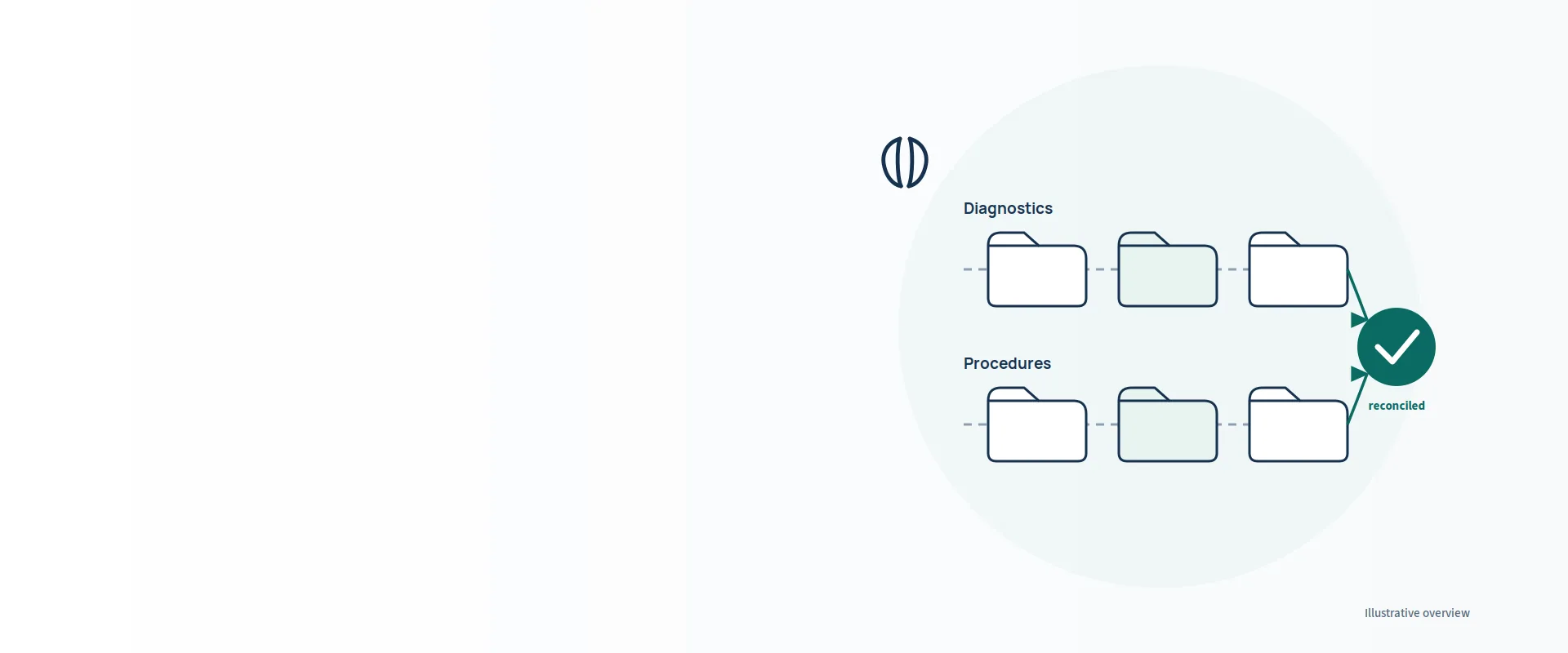
Our workflow treats every endoscopic encounter as a bundling check first. Claims are scrubbed for procedure-to-procedure edits, biopsy unit counts, and catheter or supply lines that should not be billed separately. Denials go to our denial management team with the procedure note attached, since urology appeals turn on documented medical necessity. An independent medical billing audit is available for one-time deep reviews.
Monthly reporting is built for a procedure-driven practice. Illustrative report examples: denial rates by procedure type, unit-count corrections applied before submission, and medical-necessity denial trends by payer. These are illustrative examples, not guarantees. We also reconcile authorized versus performed procedures so mismatches surface before they become denials.
Onboarding and pricing factors
Onboarding starts with a procedure-note and edit review: we sample your cystoscopy and biopsy claims, check unit reporting and catheter billing, and map your payers to their edit sets. You provide EHR and clearinghouse access, payer contracts, and authorization workflows; we configure scrubbing for your mix, set reporting cadence, and align note templates with what coders need.
Honest pricing factors for this specialty, with no invented rates:
- Pricing: we quote against your actual claim mix and procedure volume
- Minimum fees depend on monthly claim volume and provider count
- Turnaround: submission and denial-work turnaround set in the agreement
- Staffing: team credentials are shared during scoping.
- all 50 states: service availability by state
- +1 (307) 396-4107 / contact@medicalbillingservicesgroup.com: contact details
See medical billing pricing, browse our billing resources, or contact us to discuss your practice.
FAQs and dated sources
How many units can we bill when several biopsies are taken during one cystoscopy?
One. Medicare NCCI policy states that the cystoscopy-with-biopsy code includes all biopsies during the procedure and is reported with one unit of service. (Source: Medicare NCCI Policy Manual, Chapter VII, Section C; revision effective January 1, 2024; last reviewed 2026-10-07.)
Can we bill catheter placement separately with a urologic surgery?
No, when the catheter is placed at the time of or just before the procedure. Medicare NCCI treats urinary catheter insertion as a component of the global surgical package, and placement for postoperative drainage is integral to the procedure. (Source: Medicare NCCI Policy Manual, Chapter VII, Section C; revision effective January 1, 2024; last reviewed 2026-10-07.)
What if a diagnostic cystoscopy leads to an open procedure?
The record must show medical necessity for the diagnostic endoscopy. When the diagnostic work leads to a laparoscopic or open procedure, it may be separately reportable with modifier 58 as staged or planned procedures. If the endoscopy only confirms the surgical field or verifies the procedure, it is not separately reportable. (Source: Medicare NCCI Policy Manual, Chapter VII, Section C; revision effective January 1, 2024; last reviewed 2026-10-07.)
Can we bill supplies separately with bladder catheter insertion?
Under NCCI policy, the catheter and needed insertion supplies are included in the procedure, and supply codes are not separately reportable with bladder irrigation or catheter insertion codes. (Source: Medicare NCCI Policy Manual, Chapter VII, Section C; revision effective January 1, 2024; last reviewed 2026-10-07.)
Do these Medicare rules apply to our Medicaid and commercial claims?
Not automatically. State Medicaid programs follow the Medicaid NCCI manual and commercial plans use their own edit sets. (General payer-policy principle; reviewed 2026-10-07.)
Medical Billing Services Group (MBSG), Medical Billing & Revenue Cycle Management. If endoscopy bundling and biopsy unit rules are cutting into your revenue, start with a free billing audit for a claim-level view of where your billing falls short.
General educational information, not legal advice or a guarantee of reimbursement. Requirements vary by payer, plan, setting and date of service. CPT is a registered trademark of the American Medical Association.