
Medical billing collections is the disciplined follow-up of money already earned: outstanding payer claims and lawful patient balances. Medical Billing Services Group (MBSG) provides medical billing collection services covering two distinct workflows — payer accounts-receivable (A/R) follow-up (aging review, payer calls and appeals, underpayment identification) and lawful patient-balance workflows (statements, payment options, balance follow-up). MBSG does not provide licensed debt-collection services ; our work is the billing-office follow-up that happens before an account would ever reach a collection agency.
Direct answer: MBSG’s medical billing collections service follows up aging payer claims through payer calls, status checks, appeals, and underpayment review, and manages lawful patient balances through statements, payment options, and structured follow-up. Write-offs remain the practice’s decision. The service suits practices with growing A/R days, aging buckets past 90 days, or no dedicated follow-up staff. Scope is confirmed in writing before work begins.
Get a Free Billing Audit — our limited-scope free assessment can surface aging and underpayment patterns before you commit. Questions about scope? Contact us.
Scope and suitable buyers
“Collections” here means two separate workflows. First, payer A/R follow-up: submitted claims that remain unpaid, underpaid, or stuck in payer processing, worked through aging review, direct payer contact, status documentation, appeals, and underpayment identification against contracted rates. Second, lawful patient-balance workflows: patient statements, payment options, balance reminders, and follow-up in compliance with applicable billing laws and payer rules — provider-side billing communication, not third-party debt collection. To be explicit: MBSG does not act as a debt collector, does not purchase debt, and does not report patients to credit agencies under this service. Licensed collection activity would require a separate, explicitly confirmed arrangement.
This service suits practices whose days in A/R are climbing, whose 90+ and 120+ day buckets are growing, or that lack dedicated follow-up staff. It also suits practices that recently changed payers or fee schedules and suspect underpayments. Our medical billing services hub describes how collections fits alongside denial management and revenue cycle management.
Workflow
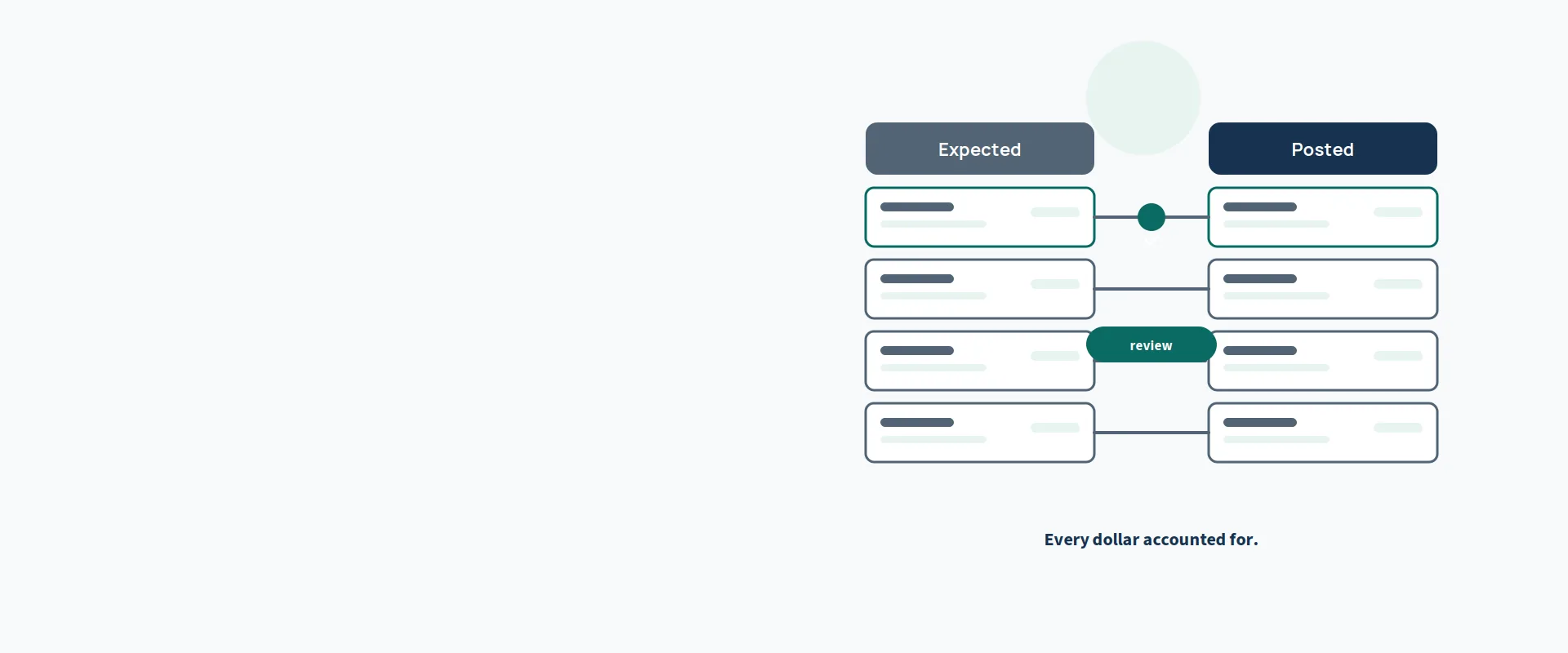
Payer and patient workstreams run in parallel, sharing an escalation path when an account cannot be resolved.
Inputs
We start with your open A/R aged by payer and patient responsibility, contracted fee schedules or allowed-amount references, current statement and payment-option policies, and any accounts already in dispute. Data access follows our standard HIPAA safeguards . We confirm your write-off thresholds and approval authority before touching a single account, and document which payers and balances are in scope versus excluded.
Quality checks
Every payer contact is documented with date, representative reference, status received, and next action — verbal payer promises are never treated as resolution. Underpayment checks compare paid amounts against contracted rates so short pays surface systematically. Patient-side work is checked for statement accuracy (correct balance, payer-paid amounts applied) before anything is sent. A second reviewer spot-checks worked accounts weekly to confirm documentation standards and escalation rules. Appeals filed on your behalf are tracked by filing date and payer deadline.
Escalation and reporting
Accounts follow an escalation ladder: initial status check, second contact with documentation, formal appeal or corrected claim where evidence supports it, and — only when contractual remedies are exhausted — a write-off recommendation with the full account history. Write-offs remain the practice’s decision; we recommend, you approve. You receive recurring A/R reporting: movement by aging bucket, recovery attributed to follow-up, appeals filed and outcomes, underpayments recovered, and accounts recommended for write-off. Reports also flag root causes — for example, a registration field producing repeated eligibility denials — so denial prevention work can address them at the source.
Included and excluded work
Included: aging review and prioritization of payer A/R; payer follow-up calls and portal status checks with full documentation; appeal preparation and filing where evidence supports it; underpayment identification against contracted rates; patient statement generation and accuracy checks; payment-option communication and structured balance follow-up; write-off recommendations with account histories; recurring A/R reporting.
Excluded: licensed debt-collection activity (debt purchase, credit reporting, legal collection actions) unless separately confirmed in writing; legal advice on debt-collection regulation; clinical or coding changes (findings feed back to your coders or our medical coding services); credentialing work blocking payment (credentialing and payer enrollment); front-end eligibility fixes (eligibility verification and prior authorization).
Onboarding and systems
Onboarding begins with an A/R snapshot and a scope confirmation naming the payers, balance types, and aging buckets included, plus your write-off approval process. We work inside your existing practice management system and clearinghouse workflows — you keep your systems; we add the follow-up discipline. Statement and payment-option language is reviewed with you before the first patient communication. Staff who previously handled follow-up informally are briefed so nothing falls between two owners.
Pricing factors
Collections pricing reflects the volume and complexity of the work: size and age of the A/R inventory, number of payers requiring direct follow-up, share of accounts needing appeals versus simple status checks, and whether patient-balance workflows are included. Pricing model and minimums are quoted after we review your A/R snapshot. See medical billing pricing for engagement structure across services.
Verified evidence
We make no invented claims about recovery rates, A/R-day reductions, or guaranteed dollars — recovery depends on your payer mix, contract terms, and inventory age, and honest follow-up starts with your actual numbers. What is verifiable: every account action documented with dates and payer references you can audit; underpayment findings citing the specific contracted rate and remittance; appeal outcomes tracked against payer-published filing deadlines. Source notes with payer, jurisdiction, and effective date accompany appeal deadlines and regulatory statements (“last reviewed 2026-10-07”). General educational information, not legal advice or a guarantee of reimbursement. Requirements vary by payer, plan, setting and date of service.
Get a Free Billing Audit to see what your aging data actually shows — or contact us to scope a collections engagement against your current A/R.
FAQs
What is the difference between medical billing collections and debt collection?
Medical billing collections, as MBSG provides it, is billing-office follow-up: payer A/R work (calls, appeals, underpayment checks) and lawful patient-balance workflows (statements, payment options, follow-up). Licensed debt collection — purchasing debt, credit reporting, legal collection — is a separate regulated activity MBSG does not provide under this service unless separately confirmed.
Who decides which accounts get written off?
You do. We escalate unresolvable accounts with a write-off recommendation and full documented history, but nothing is written off without your explicit approval under the thresholds set at onboarding.
How do you document payer follow-up?
Every contact is logged with the date, the payer’s reference or representative identifier, the status received, and the next scheduled action. Appeals are tracked by filing date and the payer’s published deadline. You can audit any account’s full history.
Can you find underpayments, not just unpaid claims?
Yes. Underpayment identification compares what each payer paid against your contracted rates, surfacing short pays that never appear as denials and would otherwise be missed by denial-only workflows.
Do you contact patients about balances?
Yes, through lawful patient-balance workflows: accurate statements, payment options, and structured follow-up — provider billing communication governed by applicable rules, not third-party collection tactics. Statement language is reviewed with you before first use.
Will collections work disrupt our current billing staff?
No. Ownership boundaries are defined at onboarding so each account has exactly one owner, and escalation rules prevent two people from working the same account.
Get a Free Billing Audit — find out what your A/R is really telling you. For everything else in the revenue cycle, browse our medical billing services or contact us directly.