
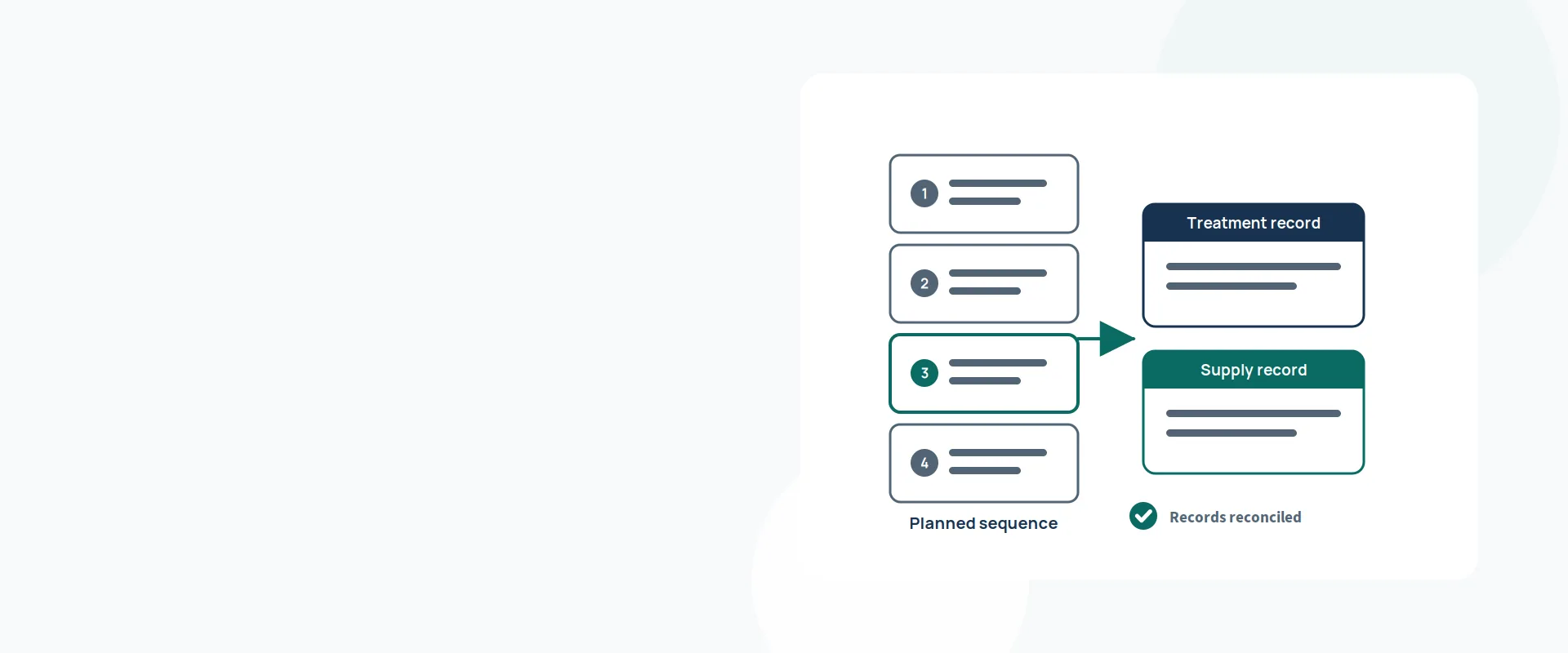
Oncology billing services from Medical Billing Services Group (MBSG) handle the claims work that makes oncology reimbursement unforgiving: infusion and chemotherapy administration edits, drug-unit reconciliation with wastage reporting, payer-specific authorization rules, and denial recovery — built for community practices and infusion centers that cannot afford write-offs.
Infusion claims leaking revenue? Get a Free Billing Audit — we will review a sample of your recent oncology claims for bundling losses, drug-unit mismatches, and denial patterns.
Practice and setting fit
Oncology billing lives or dies in the infusion chair. Community practices, freestanding infusion centers, and hospital-based cancer departments each run a different claim profile — office-based infusion under the physician fee schedule, facility-based infusion under outpatient payment rules, radiation oncology under treatment-course logic. The first job of any engagement is confirming claims are built for the setting where the service happened.
Medical Billing Services Group (MBSG) supports all specialties we serve from one revenue cycle team. Practices that moved infusion between office and hospital-outpatient settings, added satellite chairs, or inherited claims from a prior biller carry the most correctable revenue — wrong-setting administration reporting and unreconciled drug units are our audits’ most common oncology findings.
Documentation and coding risks
Oncology claims fail on precision, not effort: setting-specific bundling rules, drug lines that must reconcile to pharmacy dispense records down to the billing unit, and diagnosis documentation that must support medical necessity for high-cost services. The three examples below come from current payer-published sources — described in our own words, reviewed against the source text on 2026-10-07.
Same-day visits and infusion administration (Medicare NCCI Chapter 11)
The Medicare NCCI Policy Manual, Chapter 11 (code range 90000–99999), revision dated 1/1/2024, explains that drug and chemotherapy administration codes already reflect the work of a minimal established-patient office visit — so that visit code is not separately reportable alongside administration codes. Other office/outpatient E/M codes can be reported with modifier 25 when the physician furnishes a substantial, separately identifiable E/M service on the same date; no different diagnosis is required. Physician reporting of administration codes is limited to the office (nonfacility) setting — in a hospital outpatient department or emergency department, physicians do not report them, while hospital outpatient facilities may report them when appropriate. Only one “initial” administration code per encounter unless separate IV access sites make two medically necessary.
- Payer/program: Medicare
- Jurisdiction: US (national)
- Source title: “Medicare NCCI Policy Manual — Chapter 11: Medicine, Evaluation and Management Services (CPT Codes 90000–99999)”
- Publication date: revision date 1/1/2024 (Medicare)
- Effective date: 1/1/2024
- Last reviewed 2026-10-07
Single-dose drug wastage reporting: JW and JZ modifiers (Medicare Part B)
For separately payable Medicare Part B drugs from single-dose containers, a wastage modifier belongs on virtually every drug line. A Novitas Solutions (Medicare Administrative Contractor) billing article explains the current policy: JW goes on a separate claim line for discarded amounts (required since 1/1/2017); JZ goes on the administered line to attest nothing was discarded (required since 7/1/2023). The record must document amounts administered and discarded, and JW is not permitted when the dose is less than one billing unit — report the full unit with JZ. Claims missing the modifier may be returned as unprocessable. Excluded: packaged OPPS/ASC drugs, FQHC/RHC, overfill, inpatient admissions, flu/pneumococcal/COVID vaccines, multi-dose containers.
- Payer/program: Medicare Part B
- Jurisdiction: US (published by Novitas Solutions, a Medicare Administrative Contractor)
- Source title: “Drugs and biologicals Part B – Using the JW and JZ modifiers”
- Publication date: not shown on page
- Effective date: 1/1/2017 (JW); 7/1/2023 (JZ)
- Last reviewed 2026-10-07
Diagnosis currency and neoplasm documentation (ICD-10-CM FY 2027)
CMS confirms the FY 2027 ICD-10-CM files apply to discharges and encounters from October 1, 2026 through September 30, 2027. Each annual update matters for oncology because diagnosis coding must distinguish active malignancy under treatment from personal history and must specify anatomic site. Vague neoplasm documentation and codes carried past the update date drive medical-necessity denials on infusion and drug claims — denials that read as payer policy problems but trace back to the chart.
- Payer/program: CMS/CDC ICD-10-CM (applies across payers under HIPAA)
- Jurisdiction: US (national)
- Source title: “ICD-10 | CMS”
- Publication date: not shown on page
- Effective date: 10/1/2026–9/30/2027 (FY 2027 ICD-10-CM)
- Last reviewed 2026-10-07
Not sure your administration and drug lines would survive an audit? Get a Free Billing Audit — our billing audit process names the claim, cites the rule, and lists the correction for each finding.
Payer and authorization checks
Medicare rules do not automatically apply to Medicaid or commercial payers. NCCI bundling logic and the JW/JZ wastage policy are Medicare constructs; Medicare Advantage plans often follow them but can differ, and commercial plans publish their own infusion medical policies. Before any high-cost drug is administered, authorization must confirm drug, dose range, site of care, and number of cycles — a partial authorization (right drug, wrong site) still produces a denial. Our denial management workflow treats authorization denials as a separate queue from coding denials: they are fixed with documentation to the payer, not a corrected claim.
Workflow and reporting
Every infusion date reconciles three data sources: the physician order, the pharmacy dispense record, and the administered dose. Our coding services check administration codes against NCCI edits before submission, reconcile billed drug units to dispense quantities, and confirm wastage modifiers where required. Denials are triaged by reason — authorization, bundling, unit mismatch, medical necessity — and worked by people who know a correctable claim from a documentation fight. Monthly reporting is built from your actual data; illustrative examples: clean-claim rate by payer, denial rate by reason code, drug-unit reconciliation exceptions, AR over 90 days. Every audit deliverable names the claim, cites the rule, and lists the correction. For plain-English background on denials and coding basics, see our billing resources.
Onboarding and pricing factors
We do not publish flat rates — oncology billing cost depends on claim complexity, not just volume. Honest quote factors: monthly claim volume, providers and infusion locations, payer mix, your EHR and practice-management system, whether coding is included, and existing AR backlog size. Pricing model, minimum fees, turnaround times, and staff credentials are scoped in your written proposal — contact us for terms tailored to your volume and payer mix. States served: all 50 states. See our pricing page, or contact us at +1 (307) 396-4107 or contact@medicalbillingservicesgroup.com for a scoped quote.
FAQs and dated sources
Can our practice bill an office visit on the same day as chemotherapy?
Only when the visit is a substantial, separately identifiable E/M service — reported with modifier 25 on the E/M code (NCCI Policy Manual Chapter 11, Medicare revision 1/1/2024; reviewed 2026-10-07). A different diagnosis is not required. Routine infusion-day check-ins do not qualify.
What happens if we skip JW or JZ modifiers on drug lines?
Claims without the appropriate wastage modifier may be returned as unprocessable and are subject to audit — per the Novitas Solutions JW/JZ article (JW effective 1/1/2017; JZ effective 7/1/2023; reviewed 2026-10-07).
Why do our infusion claims keep denying for drug units?
Usually billed units that do not match the HCPCS dosage description, wastage on the wrong line, or JW used when the dose was smaller than one billing unit. Our audit reconciles dispense records against billed units to find the pattern.
Do diagnosis codes change every year?
Yes — CMS publishes updated ICD-10-CM files each October 1, and FY 2027 files apply to encounters from October 1, 2026 through September 30, 2027 (CMS ICD-10 page; reviewed 2026-10-07).
How does MBSG price oncology billing?
By scope: claim volume, locations, payer mix, systems, and whether coding and AR follow-up are included. No invented rates — your quote uses your numbers. See our pricing page.
Medical Billing Services Group (MBSG) — Medical Billing & Revenue Cycle Management. Get a Free Billing Audit and see exactly where your oncology revenue is leaking, claim by claim.
General educational information, not legal advice or a guarantee of reimbursement. Requirements vary by payer, plan, setting and date of service. CPT is a registered trademark of the American Medical Association.