
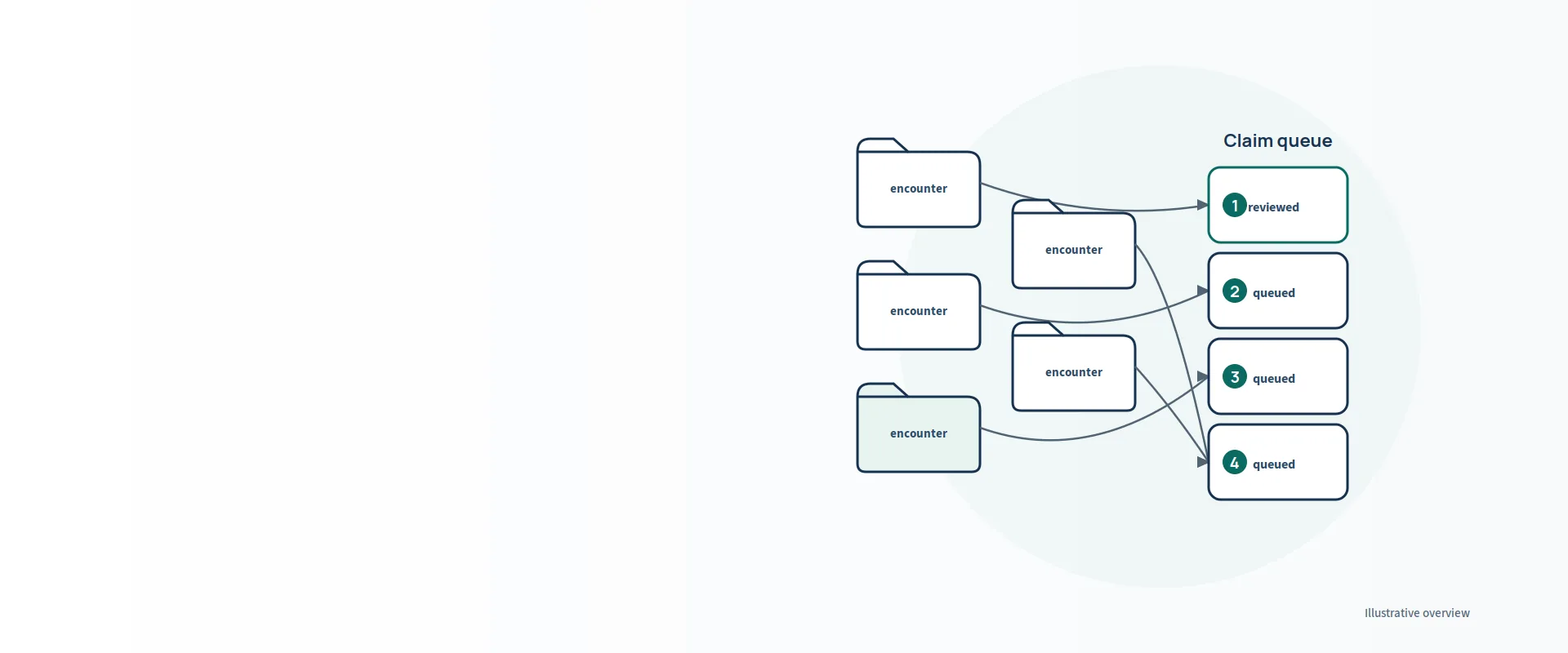
Internal medicine billing services from Medical Billing Services Group (MBSG) support primary care economics: chronic care management enrollment and documentation, preventive and problem-oriented visit combinations, coding for diabetes complications and other chronic conditions, and denial recovery across a complex payer mix.
Chronic care work going unbilled? Get a Free Billing Audit — we will review your visit and care-management claims for missed enrollment, bundling losses, and denial patterns.
Practice and setting fit
Internal medicine runs the widest visit mix in outpatient medicine: preventive exams, acute sick visits, chronic disease follow-ups, annual wellness visits, and the non-face-to-face care coordination between visits. Each visit type carries different coding rules, and the combinations — a preventive exam that becomes a problem-oriented visit, a wellness visit that launches chronic care management — are where revenue is won or lost. Multispecialty groups, primary care networks, and independent practices share the same vulnerability: high-volume, moderate-dollar claims where a small gap repeats hundreds of times a month.
Medical Billing Services Group (MBSG) supports all specialties we serve from one revenue cycle team, and internal medicine is where visit-combination rules and chronic-care documentation discipline matter most. Practices that added chronic care management without a documentation workflow, or that bill wellness and E/M visits on the same day without a modifier strategy, carry the most correctable revenue.
Documentation and coding risks
Internal medicine claims fail on eligibility and documentation completeness. Chronic care management has explicit CMS-published enrollment criteria, initiating-visit requirements, and care-plan expectations; visit combinations need modifier support; and chronic condition coding must reflect the current ICD-10-CM update. The three examples below come from current payer-published sources — described in our own words, reviewed against the source text on 2026-10-07.
Chronic care management eligibility (CMS)
CMS covers chronic care management under the Physician Fee Schedule for patients with two or more chronic conditions expected to last at least 12 months, or until the patient’s death. The conditions must place the patient at significant risk of death, acute exacerbation or decompensation, or functional decline. CMS lists example qualifying conditions including cardiovascular disease, diabetes, hypertension, COPD, depression, atrial fibrillation, arthritis, and asthma — explicitly not exhaustive. The practical risk is enrollment without documented eligibility: CCM billed for patients whose charts do not establish two qualifying conditions with the required duration and risk profile is an audit exposure, not a revenue strategy.
- Payer/program: Medicare (Physician Fee Schedule)
- Jurisdiction: US (national)
- Source title: “Chronic Care Management for Complex Conditions”
- Publication date: not shown on page
- Effective date: not stated; describes current Medicare CCM coverage
- Last reviewed 2026-10-07
The initiating visit: required, and separately billable (CMS)
Before CCM services can begin, CMS requires an initiating visit for new patients or patients not seen within the previous year. It is conducted during a comprehensive face-to-face E/M visit, an annual wellness visit, or an initial preventive physical exam. Two billing details matter: the initiating visit is not part of CCM and can be billed separately, and when the clinician personally performs extensive assessment and care planning beyond the usual effort, HCPCS code G0506 may be reported once as part of the initiating visit. Skipping the initiating visit — or bundling it invisibly into CCM billing — creates the compliance gap auditors look for first.
- Payer/program: Medicare (Physician Fee Schedule)
- Jurisdiction: US (national)
- Source title: “Chronic Care Management for Complex Conditions”
- Publication date: not shown on page
- Effective date: not stated; describes current Medicare CCM coverage
- Last reviewed 2026-10-07
Diagnosis currency for chronic conditions (ICD-10-CM FY 2027)
CMS confirms the FY 2027 ICD-10-CM files apply to discharges and encounters from October 1, 2026 through September 30, 2027. Each annual update affects the chronic conditions dominating the visit mix — diabetes with complications, hypertension, COPD, cardiovascular disease. Documentation must support the complication and severity detail the current code set requires; a chart that says “diabetes” without documented complication status cannot support the coded specificity payers expect, and that gap surfaces as medical-necessity denials or downcoding on audit.
- Payer/program: CMS/CDC ICD-10-CM (applies across payers under HIPAA)
- Jurisdiction: US (national)
- Source title: “ICD-10 | CMS”
- Publication date: not shown on page
- Effective date: 10/1/2026–9/30/2027 (FY 2027 ICD-10-CM)
- Last reviewed 2026-10-07
Wellness/E/M combinations and CCM claims getting denied? Get a Free Billing Audit — our billing audit process lists each finding with the claim, the rule, and the correction.
Payer and authorization checks
Medicare rules do not automatically apply to Medicaid or commercial payers. Chronic care management is a Medicare Physician Fee Schedule benefit; commercial and Medicaid plans may cover care management differently, under different names, or not at all — verify each payer’s policy before enrolling patients or projecting revenue. Preventive services carry their own coverage rules by payer, and a preventive visit that becomes problem-oriented needs the diagnosis linkage and modifier support each payer expects. Our denial management workflow separates eligibility denials from documentation denials: a CCM denial for missing initiating-visit documentation is fixed very differently from a preventive-service coverage denial.
Workflow and reporting
An internal medicine workflow must handle visit combinations and longitudinal care, not just single encounters. Our coding services check same-day preventive and E/M combinations for modifier support before submission, verify CCM claims against documented eligibility and the initiating-visit record, and confirm chronic condition coding matches the current ICD-10-CM update. Care-plan documentation is reviewed against CMS-described elements — problem list, measurable treatment goals, planned interventions, coordination, periodic review — so CCM billing rests on a chart that supports it. Monthly reporting is built from your actual data; illustrative examples: E/M level distribution vs. specialty norms, CCM enrollment and claim capture rate, denial rate by reason code, AR over 90 days. For plain-English background on denials and coding basics, see our billing resources.
Onboarding and pricing factors
We do not publish flat rates — internal medicine billing cost depends on volume and visit complexity, not just provider count. Honest quote factors: monthly encounter volume, providers and locations, payer mix (Medicare-heavy practices bill more CCM), your EHR and practice-management system, whether coding is included, CCM program size, and existing AR backlog. Pricing model, minimum fees, turnaround times, and staff credentials are scoped in your written proposal — contact us for terms tailored to your volume and payer mix. States served: all 50 states. See our pricing page, or contact us at +1 (307) 396-4107 or contact@medicalbillingservicesgroup.com for a scoped quote.
FAQs and dated sources
Which patients qualify for chronic care management?
Medicare covers CCM for patients with two or more chronic conditions expected to last at least 12 months or until death, where the conditions place the patient at significant risk of death, acute exacerbation or decompensation, or functional decline — per the CMS CCM page (reviewed 2026-10-07). Document both the conditions and the risk.
Is the CCM initiating visit billable separately?
Yes. CMS states the initiating visit — required for new patients or those not seen within the previous year, during a comprehensive face-to-face E/M visit, annual wellness visit, or initial preventive physical exam — is not part of CCM and can be billed separately. Extensive assessment and care planning beyond the usual effort may additionally support HCPCS code G0506 once.
What must the CCM care plan include?
Per CMS, a comprehensive care plan may include the problem list, expected outcome and prognosis, measurable treatment goals, symptom management, planned interventions, medical management, coordination with outside resources and practitioners, and periodic review. Your chart should show these elements before CCM is billed.
Do diagnosis codes change every year?
Yes. CMS publishes updated ICD-10-CM files each October 1; FY 2027 files apply to encounters from October 1, 2026 through September 30, 2027 (CMS ICD-10 page; reviewed 2026-10-07). Chronic condition coding for current dates of service should reflect the FY 2027 update.
How does MBSG price internal medicine billing?
By scope: encounter volume, locations, payer mix, CCM program size, systems, and whether coding and AR follow-up are included. No invented rates — your quote uses your numbers. See our pricing page.
Medical Billing Services Group (MBSG) — Medical Billing & Revenue Cycle Management. Get a Free Billing Audit and see exactly where your internal medicine revenue is leaking, claim by claim.
General educational information, not legal advice or a guarantee of reimbursement. Requirements vary by payer, plan, setting and date of service. CPT is a registered trademark of the American Medical Association.