
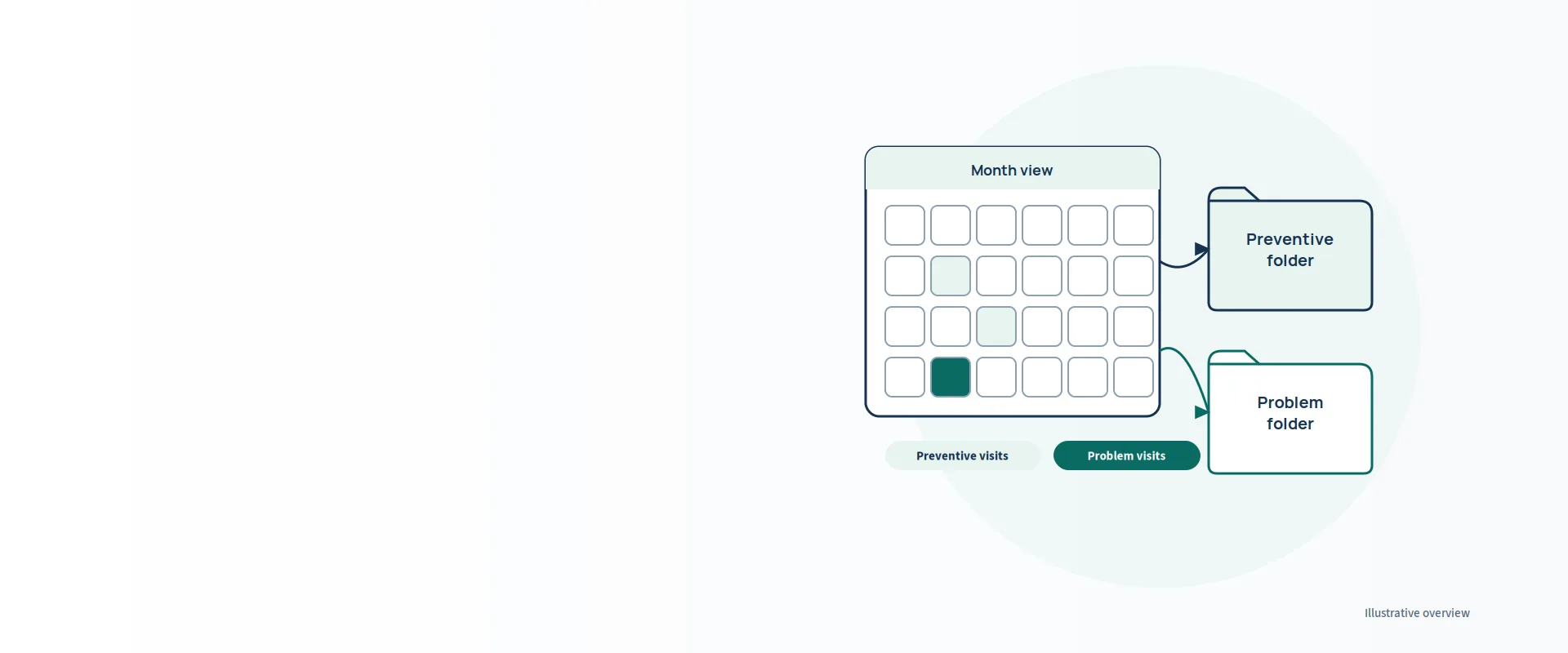
Primary care billing services from Medical Billing Services Group (MBSG) cover the full family medicine visit mix: annual wellness visits, preventive and problem-oriented combinations, chronic care and transitional care management, incident-to billing, and denial recovery across Medicare, Medicaid, and commercial payers.
Wellness visits, chronic care, and same-day combinations leaking revenue? Get a Free Billing Audit — we review your visit claims for missed AWV capture, bundling losses, and denial patterns.
Practice and setting fit
Primary care — family medicine, general internal medicine, and general practice — runs the broadest encounter mix in outpatient medicine: preventive exams, acute sick visits, chronic disease follow-ups, annual wellness visits, hospital follow-ups, and the non-face-to-face care coordination between visits. Revenue leaks concentrate at the intersections: a preventive exam that becomes problem-oriented, a wellness visit that should have launched chronic care management, a nurse visit billed incident-to without meeting the supervision and employment rules.
MBSG supports all specialties we serve from one revenue cycle team, and primary care is where visit-combination discipline and care-management documentation decide the month. Independent practices, federally qualified health center look-alikes, and multispecialty groups share the same pattern: high-volume, moderate-dollar claims where a small per-visit gap repeats hundreds of times a month. Remote delivery means one billing operation can serve your locations in all 50 states without a local billing office.
Documentation and coding risks
Primary care claims fail on three fronts: visit-type combinations without modifier support, care-management programs billed without documented eligibility, and incident-to services that do not meet CMS supervision rules. The examples below come from public CMS sources — described in our own words, reviewed against the source text on 2026-10-08.
Same-day preventive and problem-oriented visits (CMS)
When a preventive visit includes a significant, separately identifiable evaluation and management service, CMS and CPT guidance support reporting both — the preventive code plus the office/outpatient E/M code with modifier 25. The chart must document the separate work: the preventive portion and the problem-oriented portion each need their own history, exam, and medical decision-making support. The practical risk is routine: practices either never bill the second service (leaving legitimate revenue on the table) or bill it without the documentation that survives a payer review. Our medical coding services check these combinations for modifier support before submission.
- Payer/program: Medicare and most commercial payers (CPT/modifier guidance)
- Jurisdiction: US (national)
- Source title: CMS guidance on preventive services and modifier 25 usage
- Publication date: standing CMS guidance
- Effective date: current
- Last reviewed 2026-10-08
Incident-to billing rules (CMS)
Services furnished incident to a physician’s professional services can be billed under the physician’s NPI only when strict conditions hold: the services are an integral (though incidental) part of the physician’s service, they are performed under the physician’s direct supervision in the office setting, and the physician has performed an initial service and remains actively involved in the patient’s course of treatment. Auxiliary personnel must generally be employed by the physician or the practice. New-patient visits and new problems cannot be billed incident-to. When these rules are not met, the service must be billed under the rendering clinician’s own NPI — often at a lower rate — and incident-to claims without the required supervision are an audit exposure.
- Payer/program: Medicare (Physician Fee Schedule)
- Jurisdiction: US (national)
- Source title: CMS “incident to” services guidance
- Publication date: standing CMS guidance
- Effective date: current
- Last reviewed 2026-10-08
Annual wellness visit cadence (CMS)
Medicare covers the initial preventive physical examination (IPPE, G0402) once per lifetime within the first 12 months of Part B enrollment, the initial annual wellness visit (G0438) after those 12 months, and subsequent AWVs (G0439) once every 12 months. Practices lose revenue by never scheduling the AWV at all, by billing G0439 too frequently, or by failing to document the required AWV elements — health risk assessment, medical and family history review, current providers and medications, cognitive screening, and a personalized prevention plan. An AWV combined with a problem-oriented visit on the same day follows the same modifier-25 logic as preventive combinations above.
- Payer/program: Medicare (Physician Fee Schedule)
- Jurisdiction: US (national)
- Source title: CMS Annual Wellness Visit coverage guidance
- Publication date: standing CMS guidance
- Effective date: current
- Last reviewed 2026-10-08
Same-day combinations or incident-to claims drawing denials? Get a Free Billing Audit — our billing audit process lists each finding with the claim, the rule, and the correction.
Payer and authorization checks
Medicare rules do not automatically extend to Medicaid or commercial payers. Chronic care management is a Medicare benefit with explicit enrollment criteria; commercial plans may cover care coordination under different names, different codes, or not at all — verify each payer’s policy before projecting revenue. Transitional care management (99495/99496) has its own contact, visit, and medical decision-making requirements that auditors test closely. Preventive coverage varies by payer, and a preventive visit that becomes problem-oriented needs the diagnosis linkage each payer expects. Our denial management workflow separates eligibility denials from documentation denials so each gets the right fix.
Workflow and reporting
A primary care workflow has to handle visit combinations and longitudinal programs, not just single encounters. Our coding review checks same-day preventive and E/M combinations for modifier 25 support, verifies care-management claims against documented eligibility, confirms incident-to services meet supervision and employment conditions before they are billed under the physician, and keeps diagnosis coding current with the FY 2027 ICD-10-CM update (effective for encounters October 1, 2026 through September 30, 2027). Monthly reporting is built from your actual data; illustrative examples: AWV capture rate per attributed patient, E/M level distribution, care-management enrollment and claim capture, denial rate by reason code, AR over 90 days. Plain-English background on denials and coding basics is in our billing resources.
Onboarding and pricing factors
We do not publish flat rates — primary care billing cost depends on encounter volume and visit complexity, not just provider count. Honest quote factors: monthly encounter volume, providers and locations, payer mix, whether coding is included, care-management program size, and existing AR backlog. Pricing model, minimum fees, turnaround times, and staff credentials are scoped in your written proposal — contact us for terms tailored to your practice. We work inside your existing systems; compatibility is confirmed during onboarding. Data is handled under our HIPAA safeguards and business associate agreement. States served: all 50 states. See our pricing page, or contact us at +1 (307) 396-4107 or contact@medicalbillingservicesgroup.com for a scoped quote.
FAQs
Can we bill a preventive exam and a sick visit on the same day?
Yes, when the problem-oriented work is significant and separately identifiable — report the preventive code plus the E/M code with modifier 25, and document each portion’s history, exam, and decision-making separately. Without that documentation, expect the E/M line denied or recouped.
What qualifies a service for incident-to billing?
CMS requires the service to be integral to the physician’s care, furnished under the physician’s direct supervision in the office, with the physician having performed the initial service and remaining actively involved. Auxiliary staff generally must be employed by the practice. New patients and new problems cannot go incident-to.
How often can we bill the annual wellness visit?
G0438 (initial AWV) once, after the first 12 months of Part B; G0439 (subsequent AWV) once every 12 months. The IPPE (G0402) is a once-per-lifetime benefit within the first 12 months of Part B enrollment. Bill G0439 too frequently and it will deny.
Do commercial payers follow Medicare’s care-management rules?
Not automatically. CCM and TCM are Medicare Physician Fee Schedule benefits with specific criteria; commercial and Medicaid plans vary widely. Verify each payer’s policy before enrolling patients or forecasting revenue.
How does MBSG price primary care billing?
By scope: encounter volume, locations, payer mix, care-management program size, systems, and whether coding and AR follow-up are included. No invented rates — your quote uses your numbers. See our pricing page.
Medical Billing Services Group (MBSG) — Medical Billing & Revenue Cycle Management. Get a Free Billing Audit and see exactly where your primary care revenue is leaking, claim by claim.
General educational information, not legal advice or a guarantee of reimbursement. Requirements vary by payer, plan, setting and date of service. CPT is a registered trademark of the American Medical Association.