
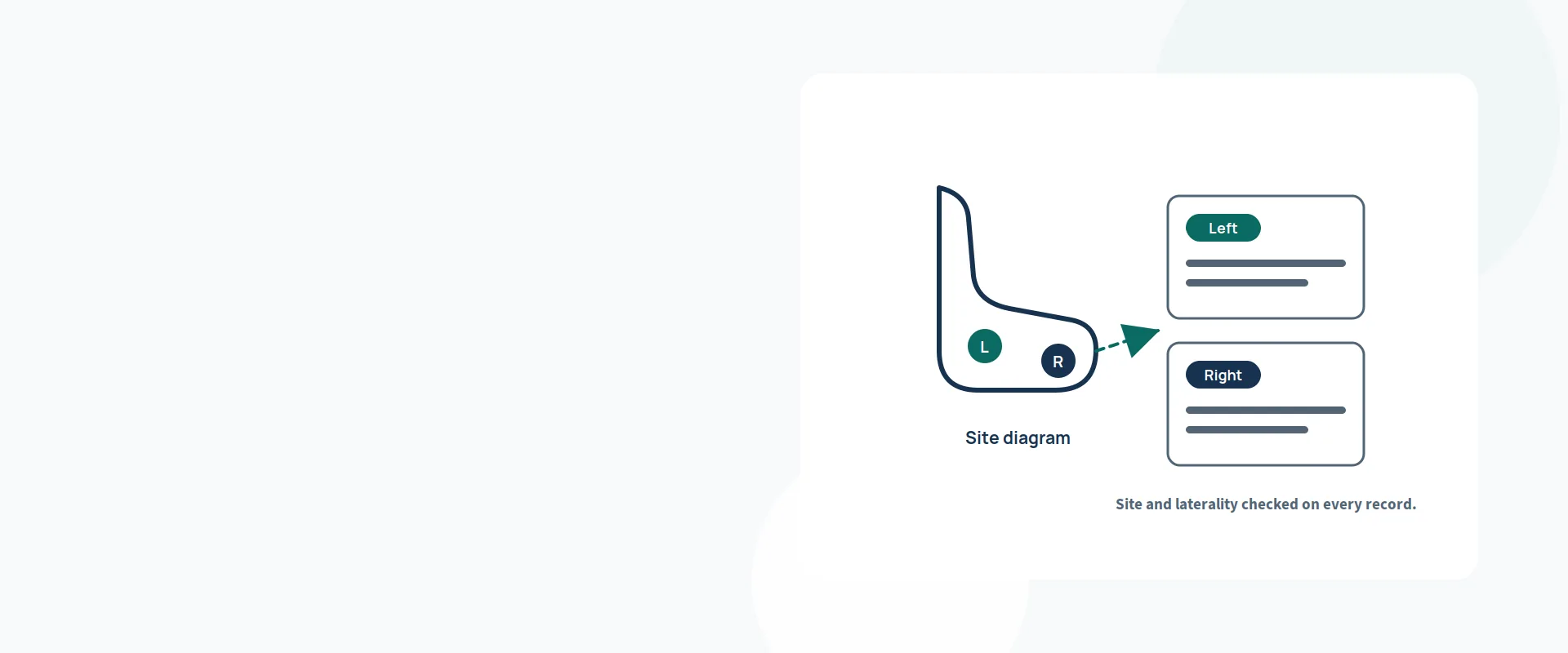
Podiatry billing services from Medical Billing Services Group (MBSG) cover the full revenue cycle for foot and ankle care — from routine foot care coverage rules through surgical coding, wound care, and DME. We handle the coverage boundaries that make podiatry billing unforgiving, so medically necessary services are paid and non-covered services are identified before they become denials.
Podiatry claims denied or downcoded? Get a Free Billing Audit — we will review your routine-care coding, modifier usage, and surgical claims and show you exactly where revenue is leaking.
Practice/setting fit
Our podiatry billing services fit private podiatry groups, foot and ankle surgical practices, wound-care clinics, and multispecialty practices with podiatry departments. Podiatry billing is distinctive because Medicare draws a hard statutory line around routine foot care: nail trimming, callus paring, and similar services are excluded from coverage unless strict medical-necessity exceptions are met. A practice that cannot tell, visit by visit, which side of that line each service falls on will either leave covered revenue behind or bill non-covered services and eat the denials.
We manage the full revenue cycle for these settings: benefits verification with attention to routine-care exclusions, coding that respects the coverage boundaries, daily claim submission with correct modifiers, payment posting with contractual adjustments, and denial follow-up that goes back to the clinical documentation. Our coding team checks podiatry claims against Medicare’s foot-care rules before submission, and our broader specialty billing programs cover your other service lines.
Documentation and coding risks
Podiatry’s biggest billing risk is the routine-versus-medically-necessary boundary. The services look identical — a nail debridement is a nail debridement — but coverage turns entirely on the patient’s underlying condition and the documented clinical findings. The claim must carry both the diagnosis that establishes the exception and the modifier that attests the findings were observed.
Routine foot care is excluded unless the exception is documented
Medicare’s benefit rules exclude routine foot care — including the cutting or removal of corns and calluses, trimming of nails, and other hygienic maintenance — except when furnished for a patient with a systemic condition (such as diabetes with peripheral involvement, peripheral vascular disease, or peripheral neuropathy) where nonprofessional performance of the service would be hazardous. The exception requires documented clinical findings, not just the diagnosis on the claim. Claims billed as routine care without meeting the exception are denied as statutorily non-covered, and no appeal can cure a missing systemic condition.
Payer/program: Medicare (CMS) · Jurisdiction: United States (federal) · Source: “Medicare Benefit Policy Manual, Publication 100-02, Chapter 15, Section 290 (Foot Care)” · Last reviewed: 2026-10-08
The Q7, Q8, and Q9 modifiers attest to class findings
When routine foot care is billed under the systemic-condition exception, the claim must carry the modifier that reflects the documented class findings: Q7 for one Class A finding, Q8 for two Class B findings, and Q9 for one Class B plus two Class C findings. These modifiers are an attestation — they assert that the findings were observed and documented in the patient’s record. Billing the modifier without the supporting documentation is a fast path to denials and audit exposure; omitting the modifier when the exception applies forfeits legitimate coverage. We match every routine-care claim’s modifier to the documented findings before submission.
Payer/program: Medicare (CMS) · Jurisdiction: United States (federal) · Source: “Medicare Benefit Policy Manual, Publication 100-02, Chapter 15, Section 290 (Foot Care)” · Last reviewed: 2026-10-08
Surgical and wound-care coding turns on depth and detail
Podiatric surgery and ulcer debridement are coded by specifics that must appear in the operative or procedure note: debridement codes are selected by tissue depth and wound size, fracture and bunion procedures by the exact technique performed, and nail procedures distinguish simple avulsion from excision with matrixectomy. Vague operative notes force coders to choose the lower-valued code or to query the surgeon — both of which delay or reduce payment. We review operative documentation against the code selected and query before billing rather than after the denial.
Payer/program: Medicare (CMS) · Jurisdiction: United States (federal) · Source: “National Correct Coding Initiative Policy Manual for Medicare Services (surgical and debridement chapters), edition current at last review” · Last reviewed: 2026-10-08
Payer and authorization checks
Podiatry practices face two authorization fronts: surgical prior authorization for bunion, hammertoe, fracture, and reconstructive procedures, and DME authorization for diabetic shoes, inserts, and offloading devices. Diabetic shoe claims in particular carry their own documentation regime — the certifying physician’s statement, the supplier’s documentation, and the timing rules must all align. We verify benefits and secure authorizations before the service where required, and our eligibility and prior authorization team tracks the DME documentation elements so shoe and device claims are not denied for missing paperwork.
Workflow and reporting
Podiatry practices need reporting that separates the revenue streams. We provide visit-type reporting (routine care versus surgical versus wound care), denial reporting by cause (coverage exclusions, modifier errors, authorization failures, documentation), and payer-level payment tracking that shows which payers follow Medicare’s routine-care rules and which apply their own. Reports arrive on a set schedule with every metric defined. Payment posting includes contractual adjustments per payer fee schedule, and denial management follows a documented path from correction to appeal — including advance beneficiary notice workflows for services expected to be non-covered.
Onboarding and pricing factors
Onboarding a podiatry practice starts with a review of your current routine-care coding, Q-modifier usage, and surgical documentation against Medicare’s foot-care rules — the boundary where most podiatry revenue leaks. We then map your service mix to the correct codes and coverage rules, confirm we can work inside your existing EHR and practice-management systems with compatibility confirmed during onboarding, and set up daily claim submission. We do not publish flat rates: pricing is quoted and scoped in your written proposal after we review your visit volume, surgical mix, payer mix, and systems. Data is handled under our HIPAA safeguards and business associate agreement. No client outcomes are cited until verified and permissioned.
FAQs and dated sources
Does Medicare cover routine foot care?
Medicare excludes routine foot care as a statutory benefit exclusion, with an exception for patients whose systemic conditions (such as diabetes with complications, peripheral vascular disease, or neuropathy) make nonprofessional performance of the service hazardous. The exception requires documented clinical findings, the appropriate diagnosis, and the correct Q modifier. Source: Medicare Benefit Policy Manual, Pub. 100-02, Chapter 15, §290 — last reviewed 2026-10-08.
What do the Q7, Q8, and Q9 modifiers mean?
They attest to the class findings documented in the patient’s record when routine foot care is billed under the systemic-condition exception: Q7 indicates one Class A finding, Q8 two Class B findings, and Q9 one Class B plus two Class C findings. The modifier must match the documented findings — billing it without documentation support risks denials and audits.
Why do diabetic shoe claims get denied?
Common causes include a missing or defective certifying physician statement, supplier documentation that does not meet the coverage criteria, timing violations (replacements ordered too soon), and billing through the wrong channel. Diabetic shoe claims follow DME rules with their own paperwork regime, so we track each required element before submission.
Can we bill an E&M visit with a podiatry procedure on the same day?
A separately identifiable E&M service may be reported with modifier 25 when the documentation supports a significant, separately identifiable evaluation beyond the procedure itself. Routine pre- and post-procedure work that is part of the procedure’s global package cannot be separately billed. We check the documentation against the global surgery rules before adding the modifier.
What should we do when a service will likely not be covered?
For services expected to be denied as not reasonable and necessary, obtain a signed Advance Beneficiary Notice (ABN) before furnishing the service and append the GA modifier to indicate the ABN is on file. Without a signed ABN, use of the GZ modifier reports the service as non-covered with no patient liability protection. We build ABN workflows into the front-desk process during onboarding.
Do you handle wound-care and ulcer debridement coding?
Yes. Debridement coding turns on tissue depth and wound surface area documented in the procedure note, and we verify the selected code against the note before billing. For chronic ulcers, we also track the underlying condition coding that supports medical necessity.
General educational information, not legal advice or a guarantee of reimbursement. Requirements vary by payer, plan, setting and date of service.
CPT is a registered trademark of the American Medical Association.
Medical Billing Services Group — Medical Billing & Revenue Cycle Management. Remote, serving all 50 US states. Call +1 (307) 396-4107 or email contact@medicalbillingservicesgroup.com — or contact our team to start with a Free Billing Audit.