
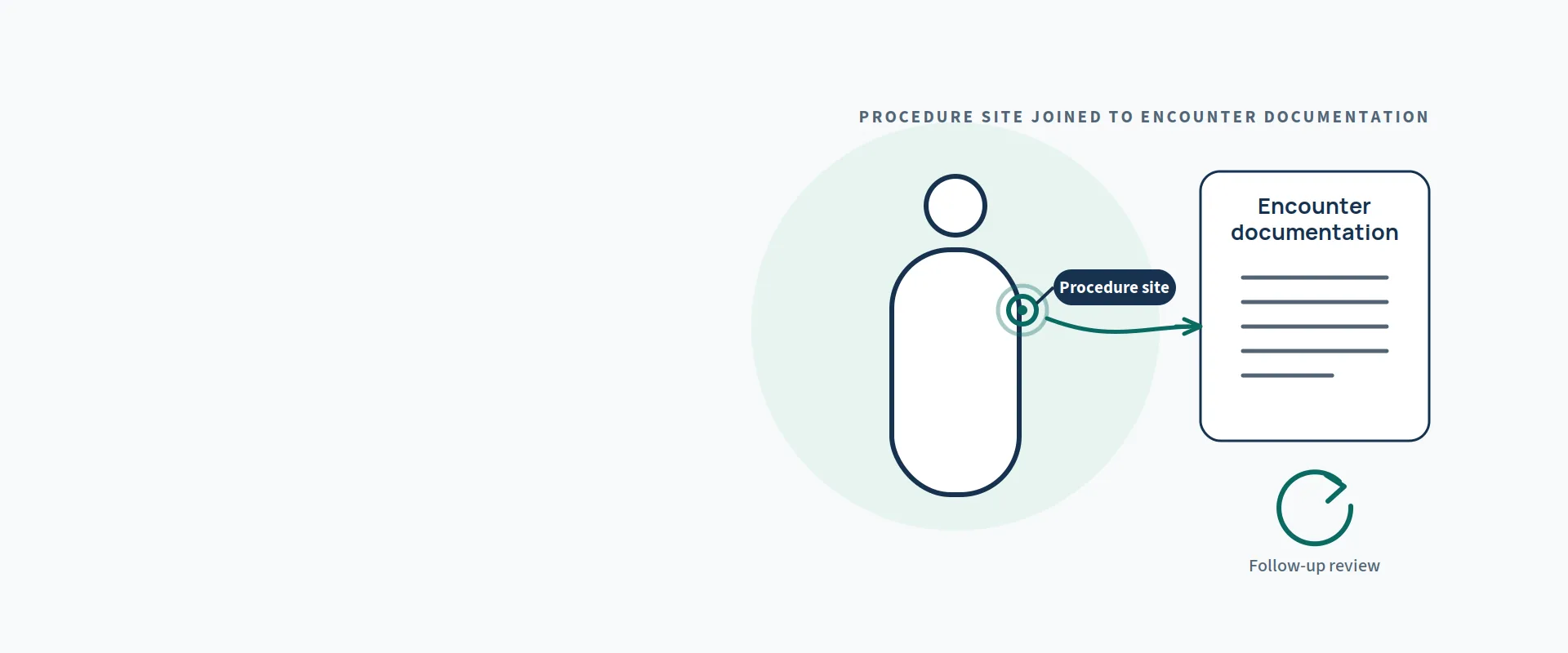
Pain management billing services from Medical Billing Services Group (MBSG) keep interventional claims clean — from office E&M and diagnostic workups to epidural injections, facet procedures, and implantable therapies. We handle prior authorizations, medical-necessity documentation review, and denials, so your practice captures the full value of every procedure.
Pain procedure denials eating your margins? Get a Free Billing Audit — we will review your injection, facet, and E&M claims and pinpoint exactly where revenue is leaking.
Practice/setting fit
Our pain management billing services fit interventional pain practices, multidisciplinary spine centers, office-based procedure suites, and hospital-affiliated pain clinics. What makes pain billing hard is the scrutiny: interventional pain procedures sit at the intersection of some of Medicare’s most actively managed policies — hospital outpatient prior authorization, local coverage determinations that define medical necessity injection by injection, and procedure-to-procedure edits that bundle components you might expect to bill separately.
We manage the full revenue cycle for these settings: benefits verification and prior authorization for scheduled interventions, coding that respects bundling rules, daily claim submission, payment posting with contractual adjustments, and denial follow-up that goes back to the procedure note. Our coding team reviews interventional documentation against published CMS rules before claims go out, and our broader specialty billing programs cover the rest of your service lines.
Documentation and coding risks
Pain management’s biggest billing risk is the gap between what was done and what the documentation proves was medically necessary. These are the rules we apply most often, each verified against a published CMS source.
Facet joint interventions need hospital OPD prior authorization
Since July 1, 2023, facet joint interventions performed in a hospital outpatient department require Medicare prior authorization as a condition of payment. The request — with supporting documentation — must be submitted before the service, and a provisional affirmation is required before the claim can be paid. Decisions are issued within 7 calendar days. This applies nationwide to hospital OPDs billing on type of bill 13X. Office-based facet procedures are not in this program, but commercial payers run their own prior authorization requirements that are often stricter. We track which setting each procedure falls in, submit the authorization with the documentation the reviewer expects, and never let a scheduled intervention proceed without a written determination on file.
Payer/program: Medicare (CMS) · Jurisdiction: United States (federal) · Source: “CY 2023 Hospital Outpatient Prospective Payment System Final Rule (CMS-1772-FC), adding facet joint interventions to the hospital OPD prior authorization program” · Publication date: November 2022 · Effective date: July 1, 2023 (facet joint interventions; PARs accepted from June 15, 2023) · Last reviewed: 2026-10-08
Multi-level facet procedures lost coverage under revised LCDs
CMS removed CPT 64492 and 64495 (facet joint injections, third and additional levels) from the prior authorization code list — not because the paperwork got easier, but because revised Local Coverage Determinations treat three- and four-level facet joint procedures as not medically necessary and non-covered. A prior authorization request for those codes would be non-affirmed, so they were taken off the list. The lesson for billing is blunt: coding a third or fourth level does not create coverage. We check your MAC’s current LCD before multi-level procedures are scheduled, so the practice knows what is covered before the patient is on the table — not after the denial arrives.
Payer/program: Medicare (CMS via MACs) · Jurisdiction: United States (federal) · Source: “CMS — Prior Authorization for Certain Hospital OPD Services, Frequently Asked Questions (November 2024 update): 64492 and 64495 removed because revised LCDs deem 3–4 level facet procedures not medically necessary” · Publication date: November 2024 · Effective date: November 2024 · Last reviewed: 2026-10-08
Medical necessity documentation decides interventional pain claims
Medicare Administrative Contractors publish Local Coverage Determinations for interventional pain procedures — epidural steroid injections, facet joint interventions, sacroiliac joint procedures — that spell out exactly what the record must contain: the diagnosis, the conservative therapy tried and for how long, the physical examination findings, and the clinical rationale for the specific intervention. These LCDs differ by jurisdiction, and they are updated. A technically perfect injection with a thin note gets denied the same as a miscoded one. Our workflow checks the procedure note against the applicable LCD’s documentation elements before the claim goes out, and flags gaps while there is still time to complete the record.
Payer/program: Medicare (CMS via MACs) · Jurisdiction: varies by MAC jurisdiction · Source: “Local Coverage Determinations for interventional pain procedures, your Medicare Administrative Contractor (check the current LCD for your jurisdiction)” · Publication date: varies by LCD · Effective date: varies by LCD · Last reviewed: 2026-10-08
Not sure your injection coding would survive an audit? Get a Free Billing Audit — we will test a sample of claims against the rules above and show you the gaps.
Payer and authorization checks
Medicare’s pain rules — including the prior authorization program and LCDs above — do not automatically apply to Medicaid or commercial plans. Commercial payers and Medicare Advantage plans run their own prior authorization portals with their own medical necessity criteria, and many require authorization for epidural injections and facet procedures even when performed in the office. We verify authorization requirements before the procedure is scheduled, submit the clinical documentation each payer asks for — prior conservative care, imaging findings, functional limitations — and track the request to a written determination. We also track authorization expirations so a delayed case does not become an uncovered one.
Workflow and reporting
Pain revenue lives in the procedure note and the authorization file, so our workflow starts with both. We reconcile scheduled interventions against completed notes and approved authorizations, code from the full documentation, scrub claims against payer-specific edit sets, submit daily, post payments, and work denials through our structured denial management process.
Reporting makes the pattern visible. Illustrative examples of what our reports show: a weekly denial snapshot grouped by root cause (prior authorization, medical necessity, bundling edits, coding), days in AR by payer, and a clean-claim rate trend for your injection and E&M lines. These are illustrative examples, not guarantees — results depend on payer mix, documentation quality, and case mix. But you will always see where revenue stands and what we are doing about it.
Onboarding and pricing factors
Onboarding starts with the free billing audit — a real review of recent claims, not a sales call. Implementation then covers payer enrollment verification, clearinghouse and EHR connections, procedure charge-capture mapping, and a coding review of your highest-volume interventions. Factors that shape a quote: monthly procedure and claim volume, office versus hospital-OPD mix, number of physicians and APPs, payer mix (including Medicare Advantage penetration), and whether you need full revenue cycle or billing only.
We do not publish one-size-fits-all rates because they would be meaningless at this complexity. Your proposal will specify the pricing model, minimum fees, and turnaround for implementation, along with the credentials of the team assigned to your account. We serve practices in all 50 states — call +1 (307) 396-4107 or email contact@medicalbillingservicesgroup.com, or review transparent pricing details.
FAQs and dated sources
Do you handle prior authorizations for facet joint interventions?
Yes. For hospital OPD cases we prepare and submit the prior authorization request with supporting documentation before the service date and track it to a provisional affirmation, since Medicare requires it as a condition of payment. For office-based and commercial cases, we work each payer’s own authorization process.
Why do our multi-level facet injections keep getting denied?
The most common reason is medical necessity: revised Medicare LCDs treat three- and four-level facet procedures as not medically necessary, and commercial payers have similar limits. We check coverage rules before scheduling so the practice knows what will be covered.
What drives most pain management denials?
The patterns we see most: missing or non-affirmed prior authorizations, medical necessity documentation that does not meet the LCD’s elements, and bundling-edit denials on injection components. Our independent billing audit shows which pattern dominates your claims.
Do Medicare’s pain rules apply to our commercial contracts?
Not automatically. Commercial payers and Medicare Advantage plans publish their own medical necessity criteria and authorization requirements. We check the rules for each payer on your panel instead of assuming Medicare’s policies govern everywhere.
How do we start working with MBSG?
Start with a free billing audit — we review recent claims across your office, injection, and procedural lines. Or contact our team directly to talk through your volume and payer mix.
Medical Billing Services Group — Medical Billing & Revenue Cycle Management. If pain billing complexity is costing you procedures’ worth of revenue, start with a Free Billing Audit and see exactly where your claims stand.
General educational information, not legal advice or a guarantee of reimbursement. Requirements vary by payer, plan, setting and date of service.
CPT is a registered trademark of the American Medical Association.