
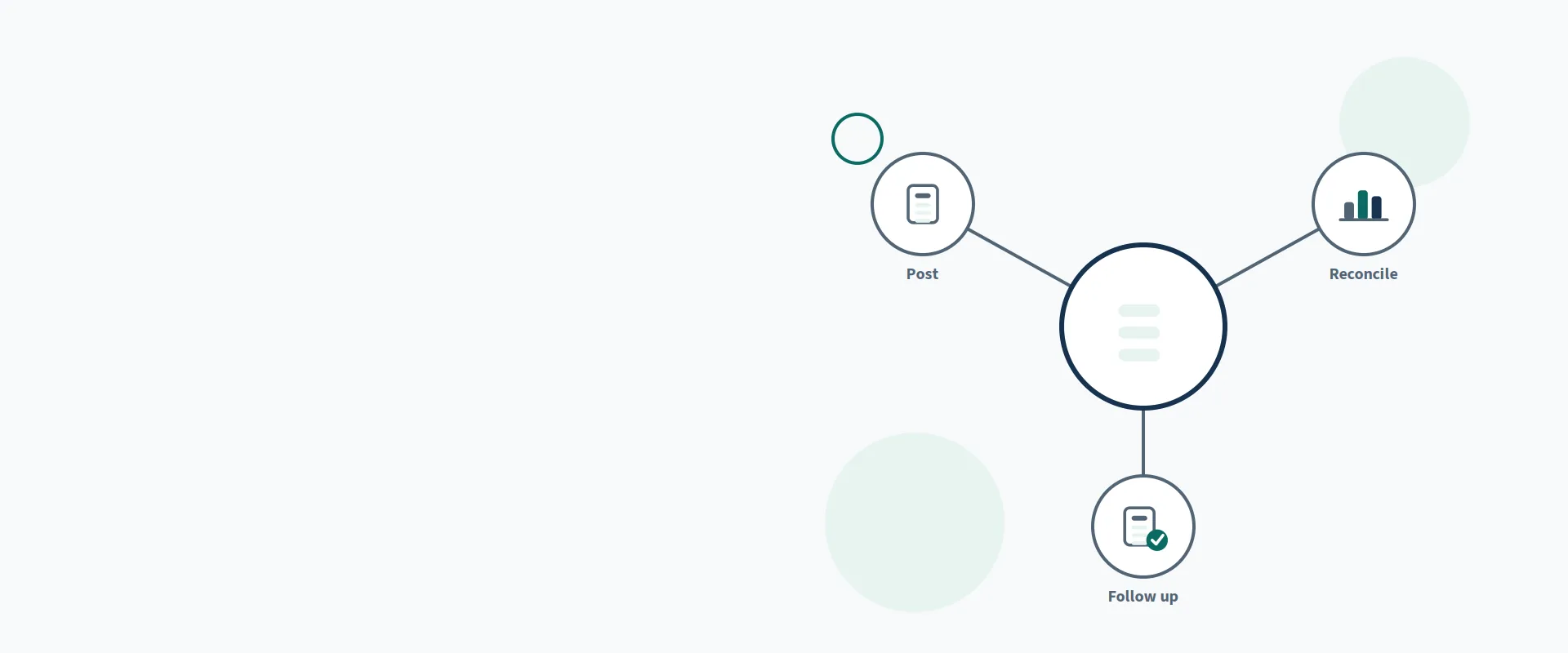
Payment posting is the step where payer payments — electronic remittance advices (ERAs) and paper explanations of benefits (EOBs) — are recorded against the claims they belong to. Done well, it keeps accounts receivable honest, surfaces underpayments automatically, and gives every downstream metric a trustworthy foundation. Done poorly, it corrupts A/R, hides denials inside “posted” batches, and makes every report downstream unreliable. Medical Billing Services Group (MBSG) treats posting as a control point, not clerical work: every payment reconciled, every variance flagged, every adjustment coded correctly.
The posting workflow
1. Receive and queue remittances.
ERAs arrive electronically through the clearinghouse; paper EOBs arrive by mail. Queue both by date and payer. Unposted remittances are unreconciled cash — track the queue so nothing sits.
2. Match payments to claims and line items.
Post each payment to the correct claim and, within the claim, the correct line item. Partial payments, multi-claim single checks, and payments spanning line items need line-level accuracy — posting a payment to the wrong line corrupts the A/R aging for both.
3. Post contractual adjustments correctly.
The difference between billed charges and the payer’s allowed amount is a contractual adjustment, not a loss — but only if the allowed amount matches the contract. Post adjustments with the correct adjustment codes, and never post a contractual adjustment on a balance the patient legitimately owes.
4. Flag variances, don’t absorb them.
When the paid amount doesn’t match the expected allowed amount, flag it as a variance for review — don’t post-and-forget. Variances are how underpayments surface; see insurance underpayment recovery. A posting workflow without variance flags is a workflow that hides revenue leakage.
5. Work denials at posting time.
Denials arrive inside remittances. The posting step should route each denial to the denial workflow with its reason codes intact — not park it. Denials discovered weeks later at “A/R review” have lost appeal time. Our denial management process starts here.
6. Post patient payments and reconcile daily.
Patient payments (copays, deductibles, coinsurance collected at time of service or by statement) post against the same claims. Reconcile cash daily: payments received versus payments posted. Unreconciled cash is a finding, not a rounding error.
7. Reconcile deposits to the bank.
The final control: total posted payments for the period must reconcile to bank deposits. If they don’t, something is unposted, misposted, or missing. This reconciliation is also where ERA/EOB completeness is verified — every expected remittance accounted for.
ERA vs. paper EOB
ERAs post faster and more accurately through auto-posting rules, but auto-posting needs guardrails: rules should post only exact matches, and anything that doesn’t match cleanly — partial payments, unexpected adjustments, new denial codes — should drop to manual review. Paper EOBs are slower and error-prone; practices still receiving significant paper volume should push payers toward ERA enrollment, which most payers support. Either way, the same controls apply: match, adjust correctly, flag variances, route denials.
Common posting failures
Posting to the wrong claim or line. Usually a rushing error or a matching-rule defect. It corrupts aging reports and can trigger incorrect patient statements. Line-level matching discipline and exception queues prevent it.
Misclassified adjustments. Contractual adjustments posted as write-offs (or vice versa) distort the net collection rate and hide real losses. Adjustment codes should be standardized and reviewed — miscoding is a training issue.
Denials posted as paid. A zero-pay line with a denial code is not a posted payment — it’s an unworked denial. Posting workflows must distinguish “paid at zero with adjustment” from “denied, needs action.” This single confusion inflates collection metrics while denials age quietly.
Unposted backlog. Remittances queue up when posting staff are pulled to other work. An unposted backlog means A/R is overstated, denial deadlines are ticking, and cash looks unreconciled. Track unposted remittance days as an operational metric.
Posting and your metrics
Every headline revenue-cycle metric depends on posting accuracy: days in A/R, net collection rate, denial rate, and clean claim rate all read from posted data. If posting is wrong, the metrics are wrong, and decisions based on them are wrong. That’s why posting controls come before performance reporting in a well-run revenue cycle — see RCM metrics for how the metrics build on this foundation.
FAQs
Should payment posting be automated?
Auto-post ERAs where matching is exact; route exceptions to humans. Full automation without exception handling posts errors at machine speed. The right mix is automation for the routine, human review for everything that doesn’t match cleanly.
How fast should remittances be posted?
Fast enough that denials enter the work queue with appeal time intact — same-week posting is a practical standard for most practices. Track unposted remittance days and treat growth as an operational alert.
What’s the difference between a contractual adjustment and a write-off?
A contractual adjustment is the agreed difference between billed charges and the payer’s allowed amount under your contract — expected and routine. A write-off is a balance you choose (or are forced) not to collect, such as a timely-filing denial or an uncollectible patient balance. Coding them correctly keeps your collection metrics honest.
How do we catch underpayments in posting?
By comparing each paid amount to the expected contracted allowed amount and flagging variances. That requires current fee schedules loaded in the system — without them, underpayments post silently. See insurance underpayment recovery.
Who should post payments — in-house or outsourced?
Either works if the controls are real: matching discipline, variance flags, denial routing, daily cash reconciliation, and deposit reconciliation. In outsourced models these controls should be visible to you in reporting, not a black box — see outsourced medical billing.
What happens to patient balances after insurance posts?
Once the payer’s portion (and adjustments) post, the remaining patient responsibility transfers to patient billing — statements, payment plans, and follow-up under lawful patient-balance workflows. Accurate posting is what makes the patient balance correct.
Get a Free Billing Audit — we’ll review your posting controls and show you what your A/R is hiding. Or contact us at +1 (307) 396-4107 or contact@medicalbillingservicesgroup.com. MBSG works remotely with practices in all 50 states.
General educational information, not legal advice or a guarantee of reimbursement. Requirements vary by payer, plan, setting and date of service. Last reviewed 2026-10-08.