
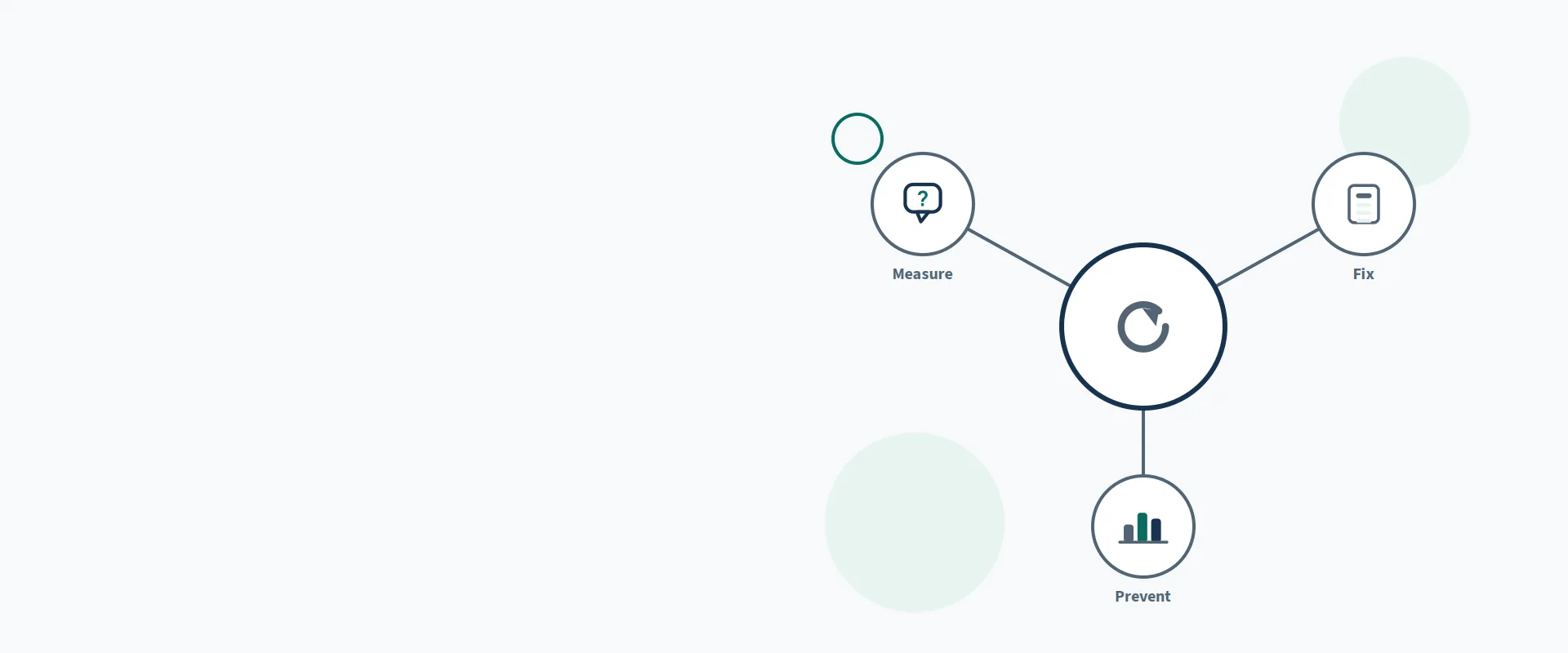
Appeals recover revenue; prevention protects it. Every denial that enters your system costs staff time to work — and a share of denials are never recoverable regardless of effort. Denial prevention is the discipline of categorizing denials, finding their root causes, fixing the upstream process that created them, and measuring whether the fix worked. Medical Billing Services Group (MBSG) runs this as a closed loop inside denial management: work the denial, learn from it, prevent the next one.
If your denial volume is already high, start with a billing audit to see your categorized denial distribution. To understand the vocabulary first, read claim rejection vs denial.
The prevention loop
1. Categorize every denial at the point of work.
When a denial is worked, tag it with a root-cause category: eligibility/coverage, authorization, coding, clinical documentation/medical necessity, timely filing, coordination of benefits, contract/pricing, or payer processing error. The tag must describe the cause, not just the reason code — “CO-97” alone doesn’t tell you whether the fix belongs to registration, the payer contract, or the coder.
2. Aggregate monthly and rank by impact.
Roll the tags up monthly: volume and dollars by category, by payer, and by provider or location. A handful of categories usually dominate. Rank by dollars at risk, not just count — fifty $20 denials matter less than five $4,000 ones.
3. Trace each top category to its process owner.
Eligibility denials trace to registration and verification. Authorization denials trace to the verification-to-authorization handoff (see prior authorization vs eligibility). Coding denials trace to coder education or encoder configuration. Medical-necessity denials trace to clinical documentation. Every category has an owner; “the billing department” is not an owner.
4. Fix the process, not the claim.
The fix is a process change with a named owner and a date: a new verification step, a scrubber rule, a documentation template, a contract clarification, a payer escalation. Working individual denials harder is not prevention — changing what happens before the next claim goes out is.
5. Measure recurrence.
After the fix, watch the category’s denial rate for the next 60–90 days. If it doesn’t move, the diagnosis was wrong — re-investigate. Prevention without measurement is just activity.
The highest-leverage prevention targets
Front-end verification discipline. Eligibility and authorization denials are the most preventable category in most practices, and the fix is entirely within your control: verify every encounter, document it, and gate encounters on authorization numbers. Practices that do this consistently see these denial categories shrink to exceptions rather than patterns.
Coding accuracy at the point of entry. Coding denials — NCCI edit failures, diagnosis-procedure mismatches, modifier errors — usually indicate a coder education or encoder gap, not a payer problem. The NCCI Policy Manual (CMS: https://www.cms.gov/medicare/coding-billing/national-correct-coding-initiative-ncci-edits/medicare-ncci-policy-manual) is the authoritative reference for procedure-to-procedure edits; coding to the current edition and documenting medical necessity for the codes reported prevents the most common coding denials. Last reviewed 2026-10-08; always verify against the current edition.
Clinical documentation that supports the codes. Medical-necessity denials are documentation denials in most cases: the service was appropriate, but the note doesn’t show it. Templates that prompt for the elements payers look for — history, exam, medical decision-making, and the link between diagnosis and procedure — prevent more denials than any appeal letter.
Timely-filing controls. Every payer has a filing deadline, and late claims deny with no appeal. Track submission lag (date of service to claim submission) and rejection turnaround (rejected claim to corrected resubmission) as operational metrics. A claim that sits unworked for weeks is a future timely-filing denial.
Contract and fee-schedule accuracy. Underpayments that look like denials are often contract-pricing errors — the payer paid, but not at the contracted rate. Loading current fee schedules and flagging variances systematically is prevention for the payment side; see insurance underpayment recovery.
What prevention is not
Prevention is not appealing more aggressively — that’s recovery. It’s not a scrubber alone — scrubbers catch format errors, not authorization or documentation gaps. And it’s not a one-time project: payer rules change, staff turns over, and new services introduce new denial patterns. The practices with the lowest denial rates treat prevention as a standing monthly routine, not a cleanup campaign.
FAQs
What’s a good denial rate to target?
We don’t publish benchmark statistics — rates vary too much by specialty and payer mix to make a universal target honest. What matters is your trend: categorize, fix, and watch your own rate move down quarter over quarter.
Should we prevent all denials or focus on certain types?
Focus by dollars and preventability. Eligibility, authorization, and timely-filing denials are highly preventable and entirely within your control — start there. Medical-necessity denials need documentation work; payer-processing errors need escalation, not process fixes.
How long does it take to see prevention results?
Front-end fixes typically show in denial data within 60–90 days (one full claim cycle). Documentation and coding changes take longer as they depend on provider behavior change. Measure by category, not by overall rate, to see what’s working.
Who owns denial prevention in a small practice?
Someone named, with time allocated — often the billing lead or practice manager. In outsourced arrangements, the billing partner should own the categorization, reporting, and fix recommendations while the practice owns clinical-side changes. See outsourced medical billing.
Do we still need appeals if prevention works?
Yes. Prevention reduces volume; it never reaches zero. Payer errors, policy gray areas, and legitimate medical-necessity disputes will always need skilled appeals. Prevention makes the appeal queue smaller and more winnable.
How does denial prevention relate to the clean claim rate?
They measure different stages. The clean claim rate captures front-end quality (fewer rejections). Denial prevention captures the full cycle (fewer adjudicated denials). Improve both, but don’t confuse them — see claim rejection vs denial.
Get a Free Billing Audit — we’ll categorize your recent denials and show you the three fixes with the biggest payoff. Or contact us at +1 (307) 396-4107 or contact@medicalbillingservicesgroup.com. MBSG works remotely with practices in all 50 states.
General educational information, not legal advice or a guarantee of reimbursement. Requirements vary by payer, plan, setting and date of service. CPT is a registered trademark of the American Medical Association. Last reviewed 2026-10-08.