
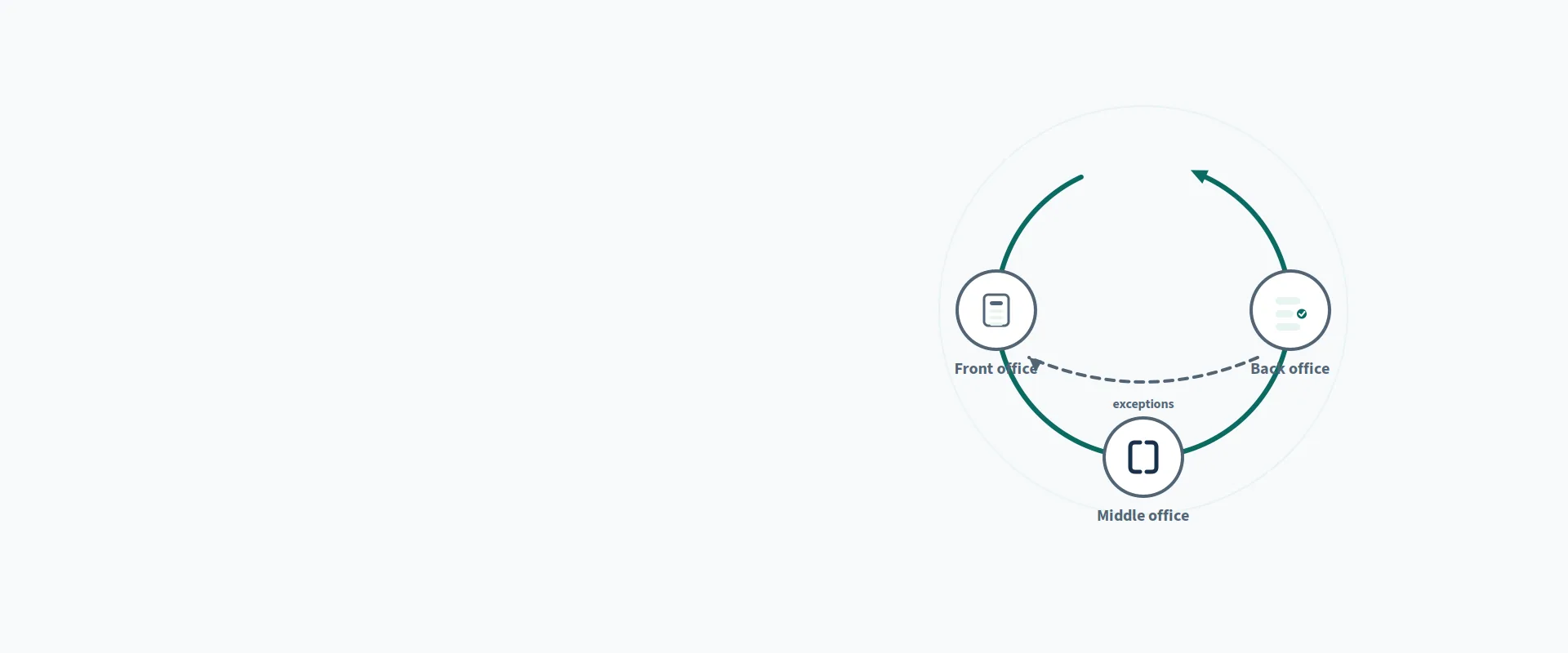
Medical Billing Services Group (MBSG) provides revenue cycle management services that cover the full lifecycle of a healthcare dollar — from the moment a patient is scheduled to the moment a payment is reconciled and reported. Where billing-only engagements handle claims, full RCM owns everything before the claim (patient access, charge capture) and everything after it (payment posting, A/R follow-up, underpayment recovery, reconciliation).
Direct answer: Revenue cycle management services manage the entire payment lifecycle — patient eligibility, charge capture, coding, claim submission, payment posting, payer follow-up, underpayment recovery, and management reporting — as one accountable operation with defined KPIs and segment-level reporting across front-end, middle, and back-end operations.
Get a Free Billing Audit — a full-cycle diagnostic of where your revenue leaks. Request your audit or contact MBSG.
Scope and suitable buyers
Full RCM suits practices that want one accountable owner for revenue, not several vendors pointing at each other when something breaks. It fits multi-provider groups, growing practices adding locations or service lines, and practices where front-end problems (bad eligibility checks, missed authorizations) keep becoming back-end denials.
It is more than some practices need. If your front end is solid and your problem is confined to denials, denial management or outsourced medical billing services may be the right scope. The services hub lays out every module so you can right-size the engagement. Full RCM supports practices across specialties; a deeper diagnostic engagement is available as a medical billing audit.
Workflow
RCM is conventionally described in three segments. Front-end RCM covers everything before the encounter is coded: scheduling accuracy, insurance eligibility verification, benefits investigation, and prior authorization. Middle RCM covers charge capture, coding, and claim scrubbing — turning the clinical encounter into a clean claim. Back-end RCM covers claim submission, payment posting, payer A/R follow-up, denial management, underpayment recovery, patient-balance workflows, and reconciliation.
Inputs, quality checks, escalation and reporting
Inputs. MBSG works from your scheduling system, EHR, practice management system, clearinghouse, and payer remittances. Front-end inputs include the schedule and coverage data; middle inputs include encounter documentation; back-end inputs include ERAs, EOBs, and denial notices.
Quality checks. Each segment has its own gates. Front end: eligibility verified before the visit, authorizations confirmed before the procedure. Middle: coding QA against current code sets, NCCI edits and payer-policy scrubbing before submission (see medical billing and coding services for the coding workflow in detail). Back end: every payment posted against the expected amount, every denial worked by root cause, every underpayment identified by comparing paid amounts against your contracted rates.
Underpayment recovery. This is a back-end RCM function covered in full here. When a payer pays less than your contracted rate, MBSG identifies the variance through contract-vs-paid comparison, assembles the appeal evidence (the contract language, the claim, the remittance), and pursues the recovery through the payer’s appeal or dispute process. Systematic underpayment — a payer repeatedly paying below contract — is escalated to your practice with the evidence package so you can address it at the contract level.
Escalation. Issues that need practice-level decisions — authorization denials requiring clinical documentation, contract disputes, credentialing gaps — go to your named contact with a plain-language brief and a deadline. Front-end, middle, and back-end escalations are tracked in one place so nothing falls between segments.
Reporting. Weekly operations snapshots per segment; a monthly management report with full-cycle KPIs, aging, denial analysis, underpayment recovery results, and reconciliation of posted payments to bank deposits. An illustrative sample of the report format is available on request; samples are illustrative, not client data.
General educational information, not legal advice or a guarantee of reimbursement. Requirements vary by payer, plan, setting and date of service.
Get a Free Billing Audit — see all three RCM segments measured against each other. Request your audit or contact MBSG.
Included and excluded work
Included: patient access and eligibility verification, prior authorization support (see also eligibility and prior authorization), charge capture review, coding and coding QA, claim scrubbing and submission, payment posting, payer A/R follow-up, denial management and appeals, underpayment identification and recovery, patient statements and lawful patient-balance workflows, reconciliation, and monthly management reporting.
Excluded unless agreed: credentialing and payer enrollment itself (see credentialing and payer enrollment), legal or licensed debt-collection activity, contract negotiation with payers (underpayment appeals use your existing contracts; negotiating new rates is a separate advisory engagement — see medical billing consulting), and legacy A/R cleanup older than the agreed transition window, scoped separately.
Onboarding and systems
What your practice provides: access to scheduling, EHR, practice management, and clearinghouse systems; payer contracts and fee schedules (required for underpayment comparison); credentialing information; historical A/R and remittance data; a legacy A/R decision; and a named contact per segment or one overall operations contact.
What MBSG does: maps the full front-to-back workflow as it exists today, configures eligibility and authorization checks, sets up coding QA and scrubbing rules, establishes payment-posting and reconciliation procedures, produces a baseline full-cycle report (front-end denial sources, middle coding accuracy, back-end aging) before changing anything, and phases in responsibility over the 60–90-day transition.
Pricing factors
Full RCM is priced on the breadth of segments included, claim and encounter volume, specialty complexity, payer mix (more payers means more contract and policy variation to manage), and the condition of baseline A/R and contracts. The percentage-of-collections denominator concept applies — the fee base should be collections actually received, with a full worked example on the medical billing pricing page.
Verified evidence
No fabricated statistics, testimonials, case studies, client names, or results are presented here.
KPI definitions
KPIs are defined so you can verify them independently. No benchmarks are stated — targets depend on specialty, payer mix, and setting.
- A/R days (days in accounts receivable): total outstanding A/R divided by average daily charges. Measures how long, on average, charges sit uncollected.
- Clean-claim rate: claims accepted by the payer on first submission without rejection or denial, divided by total claims submitted. Measures front-end and middle quality.
- Denial rate: claims denied by payers (adjudicated decisions not to pay), divided by total claims submitted. Distinct from the rejection rate, which measures pre-adjudication returns.
- Net collection rate: payments received divided by contracted (allowable) amounts — i.e., what you collected versus what your contracts said you were owed. Measures back-end effectiveness including underpayment recovery.
FAQs
How is RCM different from outsourced billing?
Outsourced billing typically covers the middle and back end — coding review, submission, A/R follow-up. Full RCM adds the front end (eligibility, authorizations, charge capture) and closes the loop with payment posting, reconciliation, underpayment recovery, and full-cycle reporting under one owner.
What is underpayment recovery, exactly?
Comparing what each payer actually paid against what your contract requires, identifying shortfalls, and appealing them with the contract and remittance as evidence. It is distinct from denial management: the claim was paid, just not paid correctly.
Do you post payments and reconcile to our bank deposits?
Yes. Payment posting includes ERA and paper EOB posting, contractual adjustment calculation, and reconciliation of posted payments against deposits so the books tie out.
Which segment usually causes the most denials?
It varies by practice, which is why the baseline full-cycle report measures all three before anything changes. Front-end authorization and eligibility gaps are a common source, but the audit — not an assumption — determines where your leaks are.
Can we start with back-end RCM and add front-end later?
Yes. Engagements can phase in by segment; the transition plan documents which segments MBSG owns at each stage.
Get a Free Billing Audit — Medical Billing Services Group (MBSG), Medical Billing & Revenue Cycle Management. Request your audit or contact MBSG.