
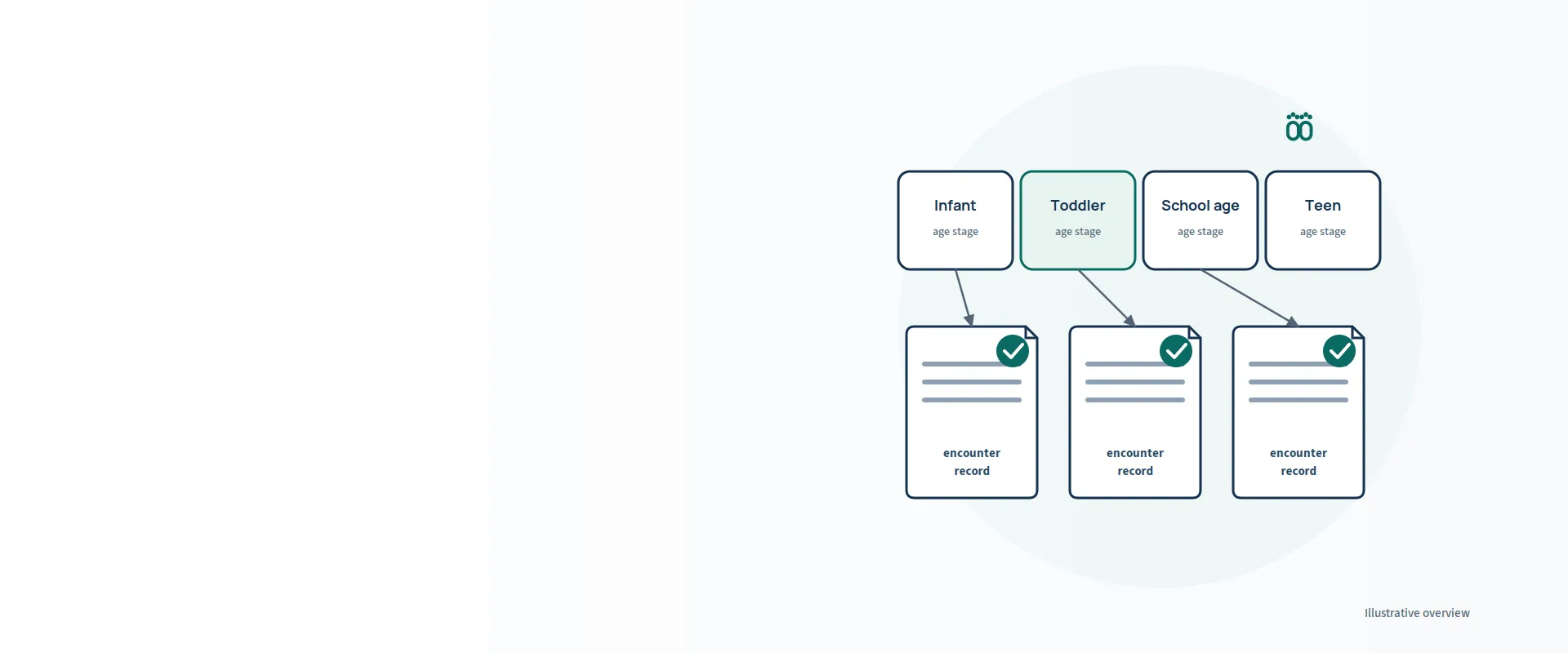
Pediatrics billing services from Medical Billing Services Group (MBSG) manage the details that shrink pediatric margins: vaccine product and administration coding, counseling-only visits, well-visit and sick-visit combinations, Vaccines for Children (VFC) program billing, and payer contract terms that protect vaccine reimbursement and denial recovery.
Vaccines going out, revenue not coming back? Get a Free Billing Audit — we will review your vaccine and well-visit claims for product/administration mismatches and underpaid contracts.
Practice and setting fit
Pediatric practices bill a high volume of low-dollar claims, so small per-claim errors compound into large losses. Private groups, multispecialty clinics, hospital-based pediatric clinics, and urgent care sites all face the same pressures: well visits that turn into sick visits, immunization-only encounters, counseling without administration, and two vaccine inventories (private stock and VFC stock) that must never be confused on a claim. Add newborn nursery billing and after-hours coverage, and the practice needs a team that understands pediatric-specific rules — not adult primary-care logic applied to children’s claims.
Medical Billing Services Group (MBSG) supports all specialties we serve from one revenue cycle team, and pediatrics is where dose-level precision and program rules matter most. Practices that added new immunization products, changed EHRs, or found vaccine reimbursement no longer covers acquisition cost carry the most correctable revenue — our audits most often surface product/administration mismatches and contracts that quietly underpay vaccine claims.
Documentation and coding risks
Pediatric coding errors cluster around immunizations: which code follows the product, which follows the administration, what the diagnosis code communicates, and when counseling or an E/M visit stands on its own. The three examples below come from the American Academy of Pediatrics’ published RSV immunization coding guidance — described in our own words, reviewed against the source text on 2026-10-07. RSV rules illustrate the product/administration/counseling structure that governs pediatric immunization billing generally.
Product code follows the dose; administration code follows the counseling (AAP RSV guidance)
The AAP’s “Coding & Payment For RSV Immunizations” guidance keys product code selection to the dose — one product code for the 0.5 mL nirsevimab dose, another for 1.0 mL, and a separate code for the 0.7 mL clesrovimab dose (two units when a 2 mL second-season dose is given). The administration code depends on same-day counseling: one code when a physician or qualified health care professional counseled on the administration date, another when no counseling was performed that date. Standard vaccine and toxoid administration codes must not be reported for RSV immunizations — those codes are limited to vaccine and toxoid products.
- Payer/program: commercial and public payers (AAP national coding guidance)
- Jurisdiction: US (national)
- Source title: “Coding & Payment For RSV Immunizations”
- Publication date: not shown on page
- Effective date: not stated; reflects current CPT structure for RSV monoclonal antibody products
- Last reviewed 2026-10-07
Diagnosis coding: prophylactic immunotherapy, not immunization (AAP RSV guidance)
The same AAP guidance addresses a common diagnosis-coding error: RSV immunization administration is not reported with the encounter-for-immunization diagnosis code, which is specific to vaccines. Since CPT classifies RSV immunizations as monoclonal antibodies, the ICD-10-CM index directs coders to the encounter-for-prophylactic-immunotherapy code for RSV. Pairing the vaccine-specific diagnosis code with a monoclonal antibody product creates a mismatch that invites denials.
- Payer/program: commercial and public payers (AAP national coding guidance)
- Jurisdiction: US (national)
- Source title: “Coding & Payment For RSV Immunizations”
- Publication date: not shown on page
- Effective date: not stated; reflects current ICD-10-CM index guidance
- Last reviewed 2026-10-07
Same-day E/M, bundled counseling, and standalone counseling (AAP RSV guidance)
The AAP guidance works through the visit combinations practices get wrong. When an E/M service and immunization administration occur on the same date, modifier 25 is required on the E/M code to report them together. Inpatient counseling for RSV immunization is bundled into any same-date E/M service — if no other billable service is provided, no claim should be filed for the counseling. When counseling is provided but immunizations are not administered that date, a standalone immunization counseling code is reported based on documented counseling time. VFC payment guidelines vary state by state, and payer contracts should include a provision paying no less than actual invoice cost plus related practice expense — including separate payment for administration.
- Payer/program: commercial and public payers (AAP national coding guidance)
- Jurisdiction: US (national)
- Source title: “Coding & Payment For RSV Immunizations”
- Publication date: not shown on page
- Effective date: not stated
- Last reviewed 2026-10-07
Counseling visits, VFC claims, and well/sick combinations getting denied? Get a Free Billing Audit — our billing audit process lists each finding with the claim, the rule, and the correction.
Payer and authorization checks
Medicare rules do not automatically apply to Medicaid or commercial payers, and in pediatrics the dominant payers are Medicaid and commercial plans — each with its own vaccine fee schedule. VFC rules add another layer: VFC-supplied product is not billed as a product cost, but administration is still separately payable, and state Medicaid guidelines for VFC administration vary state by state. Commercial contracts deserve a line-by-line review against actual invoice cost plus practice expense, exactly as the AAP recommends — a flat vaccine rate below acquisition cost is a margin leak, not a billing error. Our denial management workflow separates underpayment (contract problem) from denial (claim problem), because the fixes differ.
Workflow and reporting
Pediatric billing is inventory billing. Every immunization claim must reconcile three facts: which product was given, which stock it came from (private or VFC), and which administration and counseling codes the encounter supports. Our coding services check product codes against the documented dose, confirm administration code selection matches same-day counseling documentation, and flag well-visit/sick-visit combinations needing modifier 25 before submission. VFC and private-stock claims are tracked separately so program compliance stays clean. Monthly reporting is built from your actual data; illustrative examples: vaccine denial rate by reason, administration payment vs. contracted rate, VFC/private-stock mix, well-visit add-on capture rate. See our billing glossary and guides for deeper explainers.
Onboarding and pricing factors
We do not publish flat rates — pediatric billing cost depends on volume and program mix, not just provider count. Honest quote factors: monthly claim and immunization volume, providers and locations, Medicaid vs commercial mix, VFC participation, your EHR and practice-management system, whether coding is included, and existing AR backlog. Pricing model, minimum fees, turnaround times, and staff credentials are scoped in your written proposal — contact us for terms tailored to your volume and payer mix. States served: all 50 states. See our pricing page, or contact us at +1 (307) 396-4107 or contact@medicalbillingservicesgroup.com for a scoped quote.
FAQs and dated sources
Which diagnosis code goes with RSV immunization claims?
The encounter-for-prophylactic-immunotherapy code for RSV — not the encounter-for-immunization code, which is specific to vaccines. The AAP’s RSV guidance directs coders there because CPT classifies these products as monoclonal antibodies (reviewed 2026-10-07).
Can we bill for counseling if the immunization is given on a different day?
Yes — when counseling is provided but immunizations are not administered on the same date, a standalone immunization counseling code is reported based on documented counseling time, per the AAP guidance. Note that inpatient counseling bundled into a same-date E/M service is not separately billable.
Do we need modifier 25 when an E/M visit and immunizations happen together?
Yes. The AAP guidance requires modifier 25 on the E/M code to report it with immunization administration codes on the same date.
How does VFC billing differ from private-stock billing?
VFC-supplied product is not billed as a product cost, but administration remains separately payable — and state Medicaid guidelines for VFC administration vary state by state, so each state’s rules must be checked individually (AAP guidance; reviewed 2026-10-07).
How does MBSG price pediatric billing?
By scope: claim and immunization volume, locations, payer and VFC mix, systems, and whether coding and AR follow-up are included. No invented rates — your quote uses your numbers. See our pricing page.
Medical Billing Services Group (MBSG) — Medical Billing & Revenue Cycle Management. Get a Free Billing Audit and see exactly where your pediatric revenue is leaking, claim by claim.
General educational information, not legal advice or a guarantee of reimbursement. Requirements vary by payer, plan, setting and date of service. CPT is a registered trademark of the American Medical Association.