
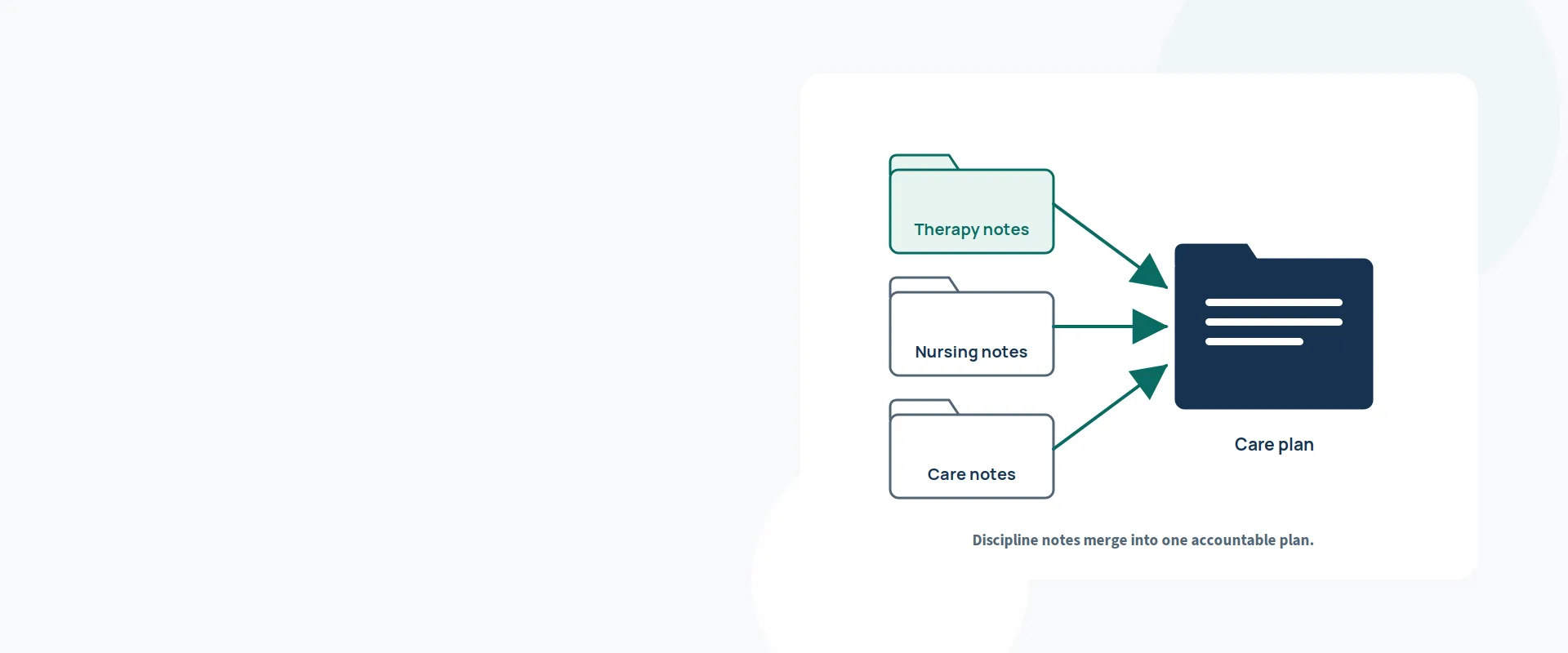
Rehabilitation billing services from Medical Billing Services Group (MBSG) cover the full spectrum of rehabilitative care — physical therapy, occupational therapy, and speech-language pathology across outpatient clinics, hospital rehab departments, and multidisciplinary programs. We handle therapy-specific edits, timed-code rules, and payer documentation standards, so your clinicians can focus on outcomes instead of paperwork.
Therapy denials piling up? Get a Free Billing Audit — we will review your PT, OT, and speech claims and pinpoint exactly where revenue is leaking.
Practice/setting fit
Our rehabilitation billing services fit multidisciplinary rehab practices, hospital outpatient rehabilitation departments, comprehensive outpatient rehabilitation facilities (CORFs), and therapy groups delivering two or three disciplines under one roof. This page is deliberately distinct from single-discipline physical therapy billing: rehabilitation billing is a coordination problem. A stroke patient may carry a physical therapy plan of care, an occupational therapy plan of care, and a speech-language pathology plan of care simultaneously — each with its own goals, its own documentation, and its own billing rules — and the claim has to keep all three straight.
What makes rehabilitation billing hard is the layering of therapy-specific rules on top of ordinary medical billing. Timed codes are billed in units governed by Medicare’s 8-minute rule. Each discipline’s plan of care is identified with its own modifier — GP for physical therapy, GO for occupational therapy, GN for speech-language pathology — and claims above the therapy threshold carry the KX modifier to attest medical necessity. Miss the modifier, miscalculate the units, or mix disciplines on a claim, and the denial is nearly automatic.
We manage the full revenue cycle for rehabilitation settings: benefits verification with therapy-visit-limit checks, coding that respects procedure-to-procedure edits across disciplines, daily claim submission, payment posting with contractual adjustments, and denial follow-up that goes back to the treatment note. Our coding team reviews therapy documentation against published edit rules before claims go out, and our broader specialty billing programs cover your other service lines.
Documentation and coding risks
Rehabilitation documentation fails in predictable places, and each one maps to a denial category:
Timed-code unit errors. Medicare’s 8-minute rule determines how many units of a timed code (such as therapeutic exercise or neuromuscular re-education) a session supports. Total timed minutes are divided into 15-minute units with specific rounding boundaries. Under-count and you leave revenue on the table; over-count and you invite take-backs. We reconcile units against documented minutes before the claim leaves.
Missing or wrong discipline modifiers. The GP, GO, and GN modifiers tell the payer which plan of care a line item belongs to. A claim line without the right modifier — or with a modifier that doesn’t match the ordering discipline — is one of the most common therapy denials we see. Our scrubber checks every therapy line for its discipline modifier.
KX modifier omissions. Once a beneficiary’s therapy spending crosses the annual threshold, claims must carry the KX modifier attesting that services remain medically necessary. Claims above the threshold without KX are denied. We track threshold proximity by beneficiary so the modifier is there when it’s needed. (Coding references last reviewed 2026-10-08; NCCI edit versions change quarterly — verify against the current edition.)
Bundling across disciplines. NCCI procedure-to-procedure edits apply within and across therapy disciplines — certain code combinations on the same date of service bundle into a single payment unless a modifier is appropriate and supported. We check edits across the full claim, not discipline by discipline.
Plan-of-care and certification gaps. Medicare requires a certified plan of care with documented goals, and physician certification on the required schedule. Claims with expired or missing certification are denied regardless of how good the treatment notes are. We track certification dates as part of the workflow.
The governing CMS reference for outpatient therapy billing is the Medicare Claims Processing Manual, Publication 100-04, Chapter 5 (Part B Outpatient Rehabilitation and CORF/OPT Services), which sets the rules for timed codes, modifiers, and certification.
Payer and authorization checks
Medicare’s therapy rules — including the 8-minute rule and KX threshold mechanics — do not automatically apply to Medicaid or commercial plans. Many commercial payers use NCCI-style edits and their own visit-limit policies, and Medicare Advantage plans apply their own prior authorization requirements to therapy episodes. We check the rules for each payer on your panel instead of assuming Medicare’s manual governs everywhere.
Visit limits are the other front line in rehabilitation. Commercial plans commonly cap therapy visits per year or per episode, and some require authorization after an initial block of visits. We verify benefits before the episode starts — including visit limits already consumed — obtain authorizations where required, and track remaining visits so a patient doesn’t arrive for session twelve of an eight-visit authorization. For hospital-based programs, we also confirm whether the payer processes the claim under the facility or professional benefit, since that changes both the claim form and the edit set.
Workflow and reporting
Rehabilitation revenue lives in the treatment note, so our workflow starts there. We reconcile scheduled visits against completed notes, code from the full documentation (timed minutes per code, discipline, goals addressed), verify discipline and KX modifiers, scrub claims against payer-specific edit sets, submit daily, post payments, and work denials through our structured denial management process.
Reporting makes the pattern visible. Illustrative examples of what our reports show: a weekly denial snapshot grouped by root cause (unit errors, missing modifiers, authorization, medical necessity), visits remaining under commercial authorizations, and clean-claim rate by discipline. These are illustrative examples, not guarantees — results depend on payer mix, documentation quality, and case mix. But you will always see where revenue stands and what we are doing about it.
Onboarding and pricing factors
Onboarding starts with the free billing audit — a real review of recent claims across your disciplines, not a sales call. Implementation then covers payer enrollment verification, clearinghouse and EHR connections, charge-capture mapping for timed codes, and a coding review of your highest-volume procedures. Factors that shape a quote: monthly visit and claim volume, number of disciplines and locations, payer mix (including Medicare Advantage penetration), and whether you need full revenue cycle or billing only.
We do not publish one-size-fits-all rates because they would be meaningless at this complexity. Pricing, minimum fees, and turnaround are quoted and scoped in your written proposal after we review your volume and payer mix. We work inside your existing systems, and compatibility is confirmed during onboarding. We serve practices in all 50 states — call +1 (307) 396-4107 or email contact@medicalbillingservicesgroup.com, or review transparent pricing details.
FAQs and dated sources
How is rehabilitation billing different from physical therapy billing?
Physical therapy billing covers one discipline. Rehabilitation billing coordinates two or three — PT, OT, and speech — each with its own plan of care, discipline modifier (GP, GO, GN), and documentation standards, often for the same patient on overlapping dates. The complexity is in keeping the disciplines’ claims, modifiers, and certifications straight.
What is the 8-minute rule?
Medicare’s method for converting timed-code minutes into billable 15-minute units: total timed minutes for a discipline are divided into units using specified rounding boundaries. It governs codes like therapeutic exercise and neuromuscular re-education. Commercial payers may use different unit rules — we check per payer.
When is the KX modifier required?
When a Medicare beneficiary’s outpatient therapy spending crosses the annual threshold, subsequent claims must carry the KX modifier attesting continued medical necessity. We track threshold proximity so the modifier is applied before the denial, not after.
Do commercial payers follow Medicare’s therapy rules?
Not automatically. Many use NCCI-style edits, but visit limits, authorization requirements, and unit-counting rules vary by payer and plan. We verify benefits and authorization requirements per payer before episodes start.
How do we start working with MBSG?
Start with a free billing audit — we review recent claims across your PT, OT, and speech lines. Or contact our team directly to talk through your volume and payer mix.
Medical Billing Services Group — Medical Billing & Revenue Cycle Management. If rehabilitation billing complexity is costing you visits’ worth of revenue, start with a Free Billing Audit and see exactly where your claims stand.
General educational information, not legal advice or a guarantee of reimbursement. Requirements vary by payer, plan, setting and date of service.
CPT is a registered trademark of the American Medical Association.