
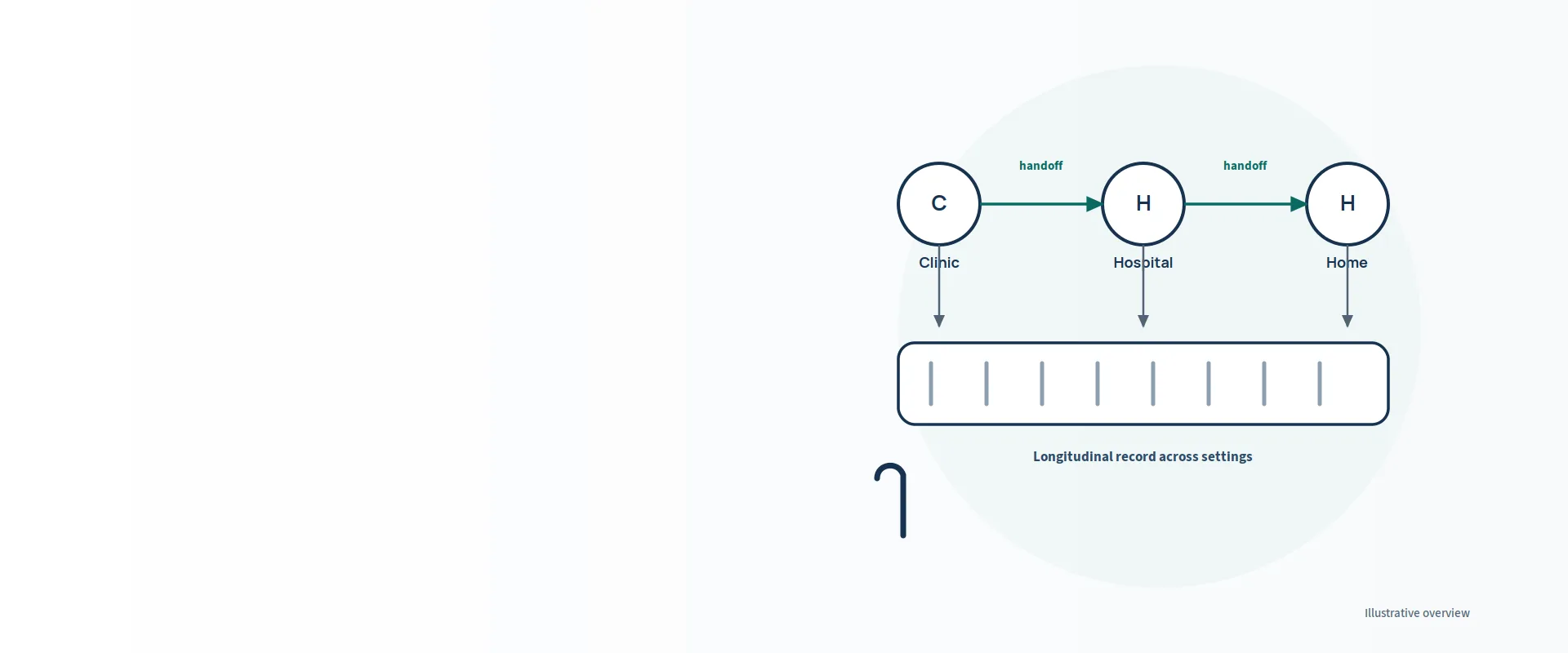
Geriatrics billing services from Medical Billing Services Group (MBSG) handle the Medicare-heavy visit mix of older-adult care: annual wellness visits, cognitive assessment and care planning, advance care planning, chronic care management, and high-complexity E/M — with denial recovery tuned to Medicare rules.
AWV, cognitive assessments, or advance care planning going unbilled? Get a Free Billing Audit — we review your Medicare claims for missed program capture and denial patterns.
Practice and setting fit
Geriatrics practices, senior-care clinics, and house-call programs live almost entirely inside Medicare rules — and Medicare pays for several services that exist only in its fee schedule. The revenue pattern is distinctive: many modest-dollar preventive and counseling codes (annual wellness visits, advance care planning, cognitive assessment) alongside high-complexity E/M for multimorbid patients, plus chronic care management for the longitudinal work between visits. Practices leak revenue by never operationalizing the Medicare-only codes, by billing them without the required elements, or by under-coding the complexity their documentation actually supports.
MBSG supports all specialties we serve from one revenue cycle team. Geriatrics work concentrates on Medicare documentation discipline: every AWV element present, every care plan element charted, every time-based code supported by face-to-face minutes. Remote delivery covers your locations in all 50 states from one billing operation.
Documentation and coding risks
Geriatric claims fail on program eligibility and element completeness. Medicare’s preventive and counseling codes each carry required components; missing one element can sink the whole claim. The examples below come from public CMS sources — described in our own words, reviewed against the source text on 2026-10-08.
Cognitive assessment and care planning (CMS)
Medicare covers cognitive assessment and care planning under HCPCS code 99483 for patients with cognitive impairment. The service requires a comprehensive assessment — cognition-focused evaluation, functional assessment, neuropsychiatric symptom review, medication review, safety evaluation, and caregiver assessment — plus a written care plan shared with the patient or caregiver. The practical risk is billing 99483 for a brief memory screen: without the full assessment and the written plan in the chart, the claim does not meet coverage requirements.
- Payer/program: Medicare (Physician Fee Schedule)
- Jurisdiction: US (national)
- Source title: CMS cognitive assessment and care plan services guidance
- Publication date: standing CMS guidance
- Effective date: current
- Last reviewed 2026-10-08
Advance care planning (CMS)
Medicare pays for advance care planning as a standalone service (99497 for the first 30 minutes of face-to-face discussion, 99498 for each additional 30 minutes) or as an optional element of the annual wellness visit. When furnished on the same day as another E/M service, the ACP time must be distinct and documented separately — it cannot double-count time already attributed to the E/M. Common failure modes: ACP billed without documented face-to-face minutes, ACP time overlapping the E/M time on the same date, and ACP never offered at all despite a willing patient population.
- Payer/program: Medicare (Physician Fee Schedule)
- Jurisdiction: US (national)
- Source title: CMS advance care planning coverage guidance
- Publication date: standing CMS guidance
- Effective date: current
- Last reviewed 2026-10-08
AWV cadence and content (CMS)
The initial AWV (G0438) follows the first 12 months of Part B enrollment; subsequent AWVs (G0439) are covered once every 12 months. Each AWV requires specific elements — health risk assessment, medical and family history, current providers and suppliers, routine measurements, cognitive screening, and a personalized prevention plan with a written schedule. Geriatrics practices that treat the AWV as a quick check-in rather than a structured, element-complete visit leave both revenue and compliance on the table. Diagnosis coding for the visit should reflect the FY 2027 ICD-10-CM update (effective October 1, 2026 through September 30, 2027).
- Payer/program: Medicare (Physician Fee Schedule)
- Jurisdiction: US (national)
- Source title: CMS Annual Wellness Visit coverage guidance
- Publication date: standing CMS guidance
- Effective date: current
- Last reviewed 2026-10-08
Medicare-only codes denied or never billed? Get a Free Billing Audit — our billing audit process lists each finding with the claim, the rule, and the correction.
Payer and authorization checks
Geriatrics is Medicare-dominant, but not Medicare-only: Medicare Advantage plans follow Medicare coverage rules with their own prior-authorization and documentation quirks, and Medicaid or commercial secondary payers each have timely-filing limits that punish slow AR follow-up. Dual-eligible patients add crossover-claim complexity — Medicare primary, Medicaid secondary — where the secondary claim fails if the primary remittance is not posted and crossed over correctly. Our denial management workflow separates coverage denials from crossover and coordination-of-benefits failures so each gets the right fix.
Workflow and reporting
A geriatrics workflow is built around Medicare program capture: AWV scheduling and element completeness checks, cognitive assessment documentation review before 99483 is billed, advance care planning time accounting kept distinct from same-day E/M time, and chronic care management enrollment verified against documented eligibility. Coding review confirms E/M levels reflect the medical decision-making complexity the chart supports — geriatric visits are frequently under-coded relative to their documented complexity. Monthly reporting is built from your actual data; illustrative examples: AWV capture per attributed beneficiary, ACP and cognitive-assessment claim rates, E/M level distribution, denial rate by reason code, AR over 90 days. Plain-English background on denials and coding basics is in our billing resources.
Onboarding and pricing factors
We do not publish flat rates — geriatrics billing cost depends on encounter volume and program mix, not just provider count. Honest quote factors: monthly encounter volume, providers and locations, Medicare vs. Medicare Advantage mix, AWV and care-management program size, your EHR and practice-management system, whether coding is included, and existing AR backlog. Pricing model, minimum fees, turnaround times, and staff credentials are scoped in your written proposal — contact us for terms tailored to your practice. We work inside your existing systems; compatibility is confirmed during onboarding. Data is handled under our HIPAA safeguards and business associate agreement. States served: all 50 states. See our pricing page, or contact us at +1 (307) 396-4107 or contact@medicalbillingservicesgroup.com for a scoped quote.
FAQs
What does Medicare’s cognitive assessment code require?
Code 99483 requires a comprehensive cognition-focused evaluation, functional and neuropsychiatric assessment, medication and safety review, caregiver assessment, and a written care plan shared with the patient or caregiver. A brief memory screen alone does not support the code.
Can advance care planning be billed with an office visit?
Yes — 99497/99498 are separately payable when the ACP discussion time is face-to-face, documented in minutes, and distinct from time counted toward any same-day E/M service. ACP can also be furnished as an optional AWV element.
How often is the annual wellness visit covered?
G0438 once, after the first 12 months of Part B; G0439 once every 12 months thereafter. The IPPE (G0402) is once per lifetime within the first 12 months of Part B enrollment.
Do Medicare Advantage plans follow the same rules?
They follow Medicare coverage rules but add their own prior-authorization requirements and documentation preferences. Verify each plan’s policy — especially for advance care planning and cognitive assessment — before projecting revenue.
How does MBSG price geriatrics billing?
By scope: encounter volume, locations, Medicare vs. Medicare Advantage mix, AWV and care-management program size, systems, and whether coding and AR follow-up are included. No invented rates — your quote uses your numbers. See our pricing page.
Medical Billing Services Group (MBSG) — Medical Billing & Revenue Cycle Management. Get a Free Billing Audit and see exactly where your geriatrics revenue is leaking, claim by claim.
General educational information, not legal advice or a guarantee of reimbursement. Requirements vary by payer, plan, setting and date of service. CPT is a registered trademark of the American Medical Association.