
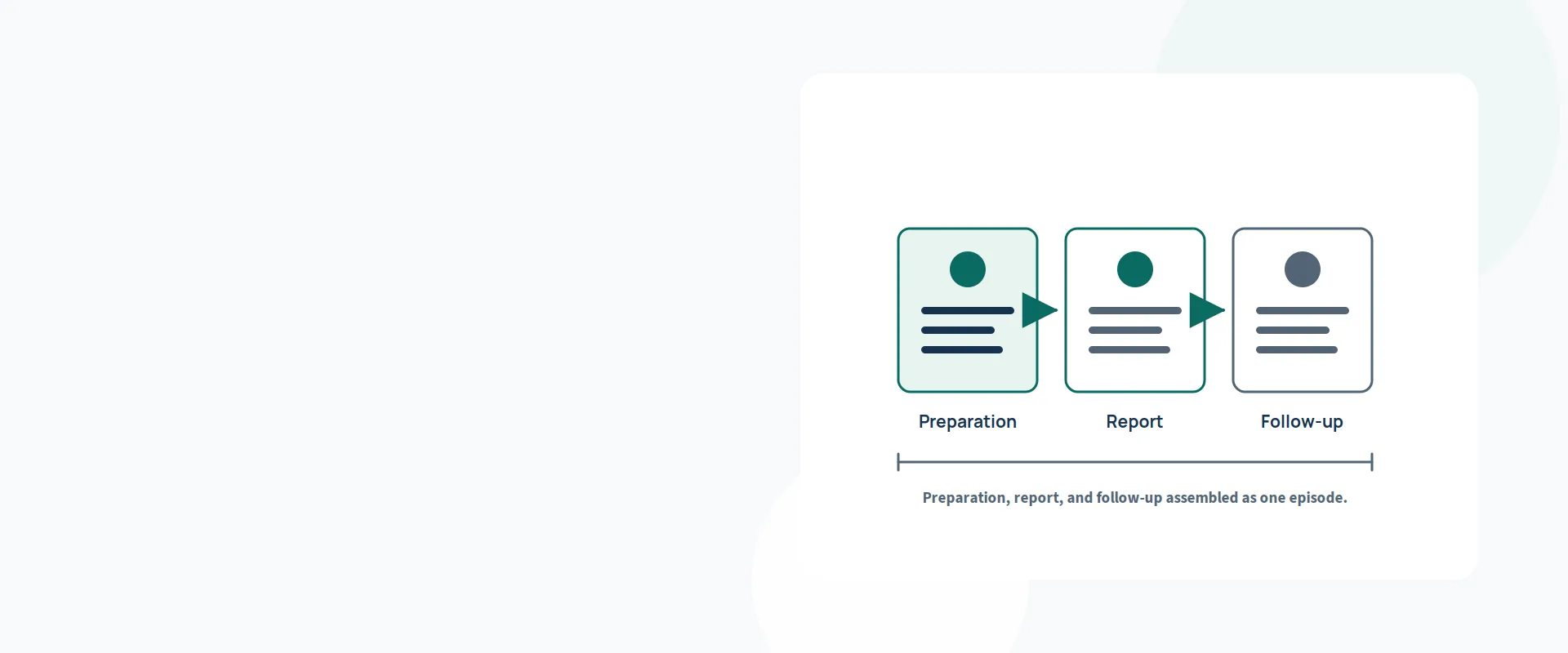
Gastroenterology billing services from Medical Billing Services Group (MBSG) keep endoscopy and colonoscopy claims clean — from screening and diagnostic scopes to therapeutic interventions. We code at the lesion level, support every modifier with documentation, and work denials, so your ASC or practice gets paid for the full scope of work.
Endoscopy claims getting downcoded or denied? Get a Free Billing Audit — we will review your scope claims against the lesion-level rules below and show you what is being left on the table.
Practice/setting fit
Our gastroenterology billing services fit single-specialty GI groups, ambulatory surgery centers, hospital outpatient endoscopy suites, and office-based practices. GI billing is unforgiving because payment turns on clinical detail: which lesion, what size, which technique, what the pathology showed. A schedule that says “colonoscopy” tells billing almost nothing — the operative report tells it everything.
We run the full revenue cycle for these settings: eligibility and benefits verification (including screening-versus-diagnostic coverage checks), prior authorization for therapeutic procedures, coding directly from the endoscopy report with pathology reconciliation, daily claim submission, payment posting, and denial follow-up. Our endoscopy-experienced coding team codes at the lesion level your reports support, and our specialty billing programs extend the same discipline to your office E&M and infusion lines.
Documentation and coding risks
In GI, the operative report is the claim. Payers’ edits are built around what was done to which lesion with which technique — and modifiers that bypass those edits only work when the report evidences the distinct service. These are the rules we code by, each verified against a published CMS source.
Same lesion or separate lesions decides the modifier
Few coding decisions in GI hinge on a single word the way this one does. When a therapeutic removal and a biopsy are performed during the same colonoscopy, a procedure-to-procedure edit pairs the two — and the edit can only be bypassed with modifier 59 or XS when the two procedures were performed on separate lesions. If they happened at separate patient encounters instead, modifier 59 or XE applies. The operative report must evidence which lesion received which technique; without that lesion-level documentation, the modifier has nothing to stand on and the second procedure denies. This is the core discipline of GI billing: code what the report proves, at the lesion.
Payer/program: Medicare (CMS) · Jurisdiction: United States (federal) · Source: “National Correct Coding Initiative Policy Manual for Medicare Services, Chapter 6: Surgery: Digestive System (CPT Codes 40000–49999)” · Publication date: edition with Medicare revision date 1/1/2025 · Effective date: 1/1/2025 · Last reviewed: 2026-10-07
Diagnostic scopes are included in therapeutic ones
A diagnostic endoscopy performed during the same encounter as a surgical endoscopy is not separately reported — the surgical procedure includes the diagnostic look. When multiple endoscopic services are performed, the rule is to report the single most comprehensive code describing the work; additional codes are only reported when one code cannot describe what was done, with the multiple-procedure modifier on the secondary code. Repeating the same endoscopic procedure multiple times in the same region at one encounter is reported once, as a single unit. Practices that stack a diagnostic code on top of every therapeutic scope are unbundling — and payers’ edits catch it.
Payer/program: Medicare (CMS) · Jurisdiction: United States (federal) · Source: “National Correct Coding Initiative Policy Manual for Medicare Services, Chapter 6: Surgery: Digestive System (CPT Codes 40000–49999)” · Publication date: edition with Medicare revision date 1/1/2025 · Effective date: 1/1/2025 · Last reviewed: 2026-10-07
Bleeding control during endoscopy is not a separate service
Bleeding is an expected part of therapeutic endoscopy, and controlling it is integral to the procedure — not a separately reportable service. This trips up practices when a difficult polypectomy requires extended hemostasis work: the effort is real, but the coding rules treat it as part of the procedure already reported. The same integral-component principle runs through GI coding — venous access, sedation-related infusions, and imaging guidance used to perform the endoscopy are components, not separate lines. Clean GI claims come from documenting the lesions and techniques thoroughly, not from adding lines for work the base procedure already includes.
Payer/program: Medicare (CMS) · Jurisdiction: United States (federal) · Source: “National Correct Coding Initiative Policy Manual for Medicare Services, Chapter 6: Surgery: Digestive System (CPT Codes 40000–49999)” · Publication date: edition with Medicare revision date 1/1/2025 · Effective date: 1/1/2025 · Last reviewed: 2026-10-07
Modifiers without documentation are just denials waiting to happen. Get a Free Billing Audit — we will check whether your reports actually support the modifiers on your claims.
Payer and authorization checks
Medicare’s endoscopy rules — including the edit policies above — do not automatically apply to Medicaid or commercial plans. Each payer publishes its own coverage policies, and nowhere does this matter more than in screening-versus-diagnostic colonoscopy: coverage, cost-sharing, and frequency limits differ by payer and by the intent documented at the time of the procedure. Therapeutic procedures and anesthesia services frequently require prior authorization, with requirements that vary by plan. We verify benefits and screening-versus-diagnostic coverage before the procedure, secure authorizations for therapeutic work, and confirm that the diagnosis coding on the claim matches the documented intent — because a screening coded as diagnostic (or the reverse) is a denial or a patient-billing problem waiting to happen.
Workflow and reporting
Our GI workflow is built around the endoscopy report. We code from the completed report — never from the schedule — capturing lesion location, size, number, and technique for each intervention, then reconcile pathology results back to the procedures before claims go out. Claims are scrubbed against payer-specific edit sets, submitted daily, and followed through our structured denial management process when payers push back.
Reporting shows where the detail pays off. Illustrative examples of what our reports show: a weekly denial snapshot grouped by root cause (lesion documentation, modifier use, authorization, medical necessity), pathology reconciliation status for open cases, and net collection rate by procedure type and payer. These are illustrative examples, not guarantees — results depend on report quality, payer mix, and case mix. But you will always see the connection between documentation detail and dollars collected.
Onboarding and pricing factors
Onboarding starts with the free billing audit — a real review of recent scope claims, not a sales call. Implementation covers payer enrollment verification, EHR and endoscopy-reporting-system connections, pathology reconciliation setup, and a coding review of your most-used procedure combinations. Factors that shape a quote: monthly scope volume, ASC versus office mix, number of physicians, pathology volume, payer mix, and whether you need full revenue cycle or billing only.
We do not publish one-size-fits-all rates because scope mix makes them meaningless. Your proposal will specify the pricing model, minimum fees, and turnaround for implementation, along with the credentials of the team assigned to your account. We serve practices in all 50 states — call +1 (307) 396-4107 or email contact@medicalbillingservicesgroup.com, or review transparent pricing details.
FAQs and dated sources
Do you code from the endoscopy report or the procedure schedule?
From the report — always. The schedule tells us a scope happened; only the report tells us which lesions were treated, with which technique, at which site. Coding from the schedule is how practices end up with modifiers their documentation cannot support.
How do you handle pathology reconciliation?
We match pathology results back to the procedures performed and hold or amend coding where the pathology changes the picture. Open pathology cases are tracked in reporting so nothing falls through the cracks between the procedure date and the final report.
Why do our colonoscopy claims deny for medical necessity?
The usual causes: the documented intent (screening versus diagnostic) does not match the diagnosis coding on the claim, frequency limits for screening intervals, or missing documentation of symptoms that justify a diagnostic study. Our independent billing audit identifies which of these is driving your denials.
Do Medicare endoscopy rules apply to our commercial contracts?
Not automatically. Commercial payers publish their own edit policies and coverage rules, and screening-versus-diagnostic handling varies widely. We check each payer’s rules rather than assuming Medicare’s manual governs everywhere.
How do we start working with MBSG?
Start with a free billing audit — we review recent scope claims and show you the documentation and coding gaps. Or contact our team directly to talk through your volume and setting.
Medical Billing Services Group — Medical Billing & Revenue Cycle Management. If GI billing detail is costing you revenue, start with a Free Billing Audit and see exactly where your scope claims stand.
General educational information, not legal advice or a guarantee of reimbursement. Requirements vary by payer, plan, setting and date of service.
CPT is a registered trademark of the American Medical Association.